
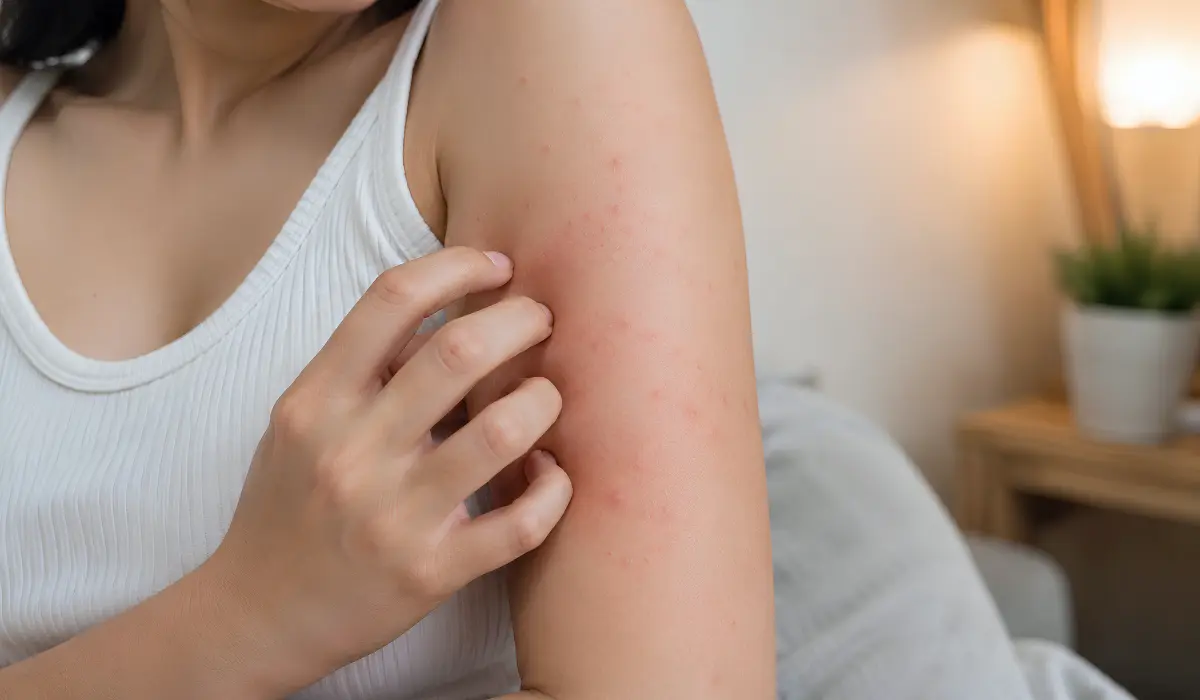
A skin parasitic infection happens when parasites such as mites, lice, or certain larvae live on or enter the skin. Common signs may include intense itching, rash, small bumps, bite marks, skin irritation, or a crawling feeling.
Not every itchy rash is caused by parasites. Allergies, eczema, fungal infections, insect bites, and bacterial skin infections can look similar. That is why proper diagnosis matters before using strong creams, lice treatments, or parasite medicines.
What Is a Skin Parasitic Infection?
A skin parasitic infection or infestation occurs when a parasite affects the skin surface or burrows into the outer skin layer. Some parasites live on the skin, while others bite, feed, or move through the skin.
Common examples include scabies, head lice, body lice, and cutaneous larva migrans. Scabies is caused by tiny mites that burrow into the skin and trigger itching and rash. The most common scabies symptoms are intense itching, especially at night, and a pimple-like itchy rash.
Common Symptoms of Skin Parasites
Symptoms can vary depending on the parasite. Many people notice itching first, but the rash pattern and location can give helpful clues.
Common symptoms may include:
- Intense itching, especially at night
- Red bumps, small blisters, or irritated patches
- Bite marks or scratch marks
- Thin, raised, or winding lines on the skin
- Sores from scratching
- Crawling or tickling feeling
- Itchy scalp, neck, waist, or skin folds
- Rash that spreads to close contacts
If several people in the same home develop itching or rash, a contagious skin parasite such as scabies or lice may be possible.
Types of Skin Parasitic Infections
Scabies
Scabies is one of the most common skin parasite problems. It spreads mainly through prolonged direct skin-to-skin contact or shared bedding and clothing with an infected person. A quick handshake or brief hug usually does not spread scabies.
The rash often appears between fingers, on wrists, elbows, armpits, waist, buttocks, genitals, or shoulder blades. The itching can be severe at night and may continue for a while even after treatment.
Lice
Lice are parasitic insects that feed on human blood. Head lice usually affect the scalp, while body lice live mostly in clothing and bedding and move to the skin to feed.
Body lice can cause itching, rash, and bite marks. They spread through direct contact with an infested person or contaminated clothing and bedding. Improving hygiene and access to clean clothes is central to body lice control.
Cutaneous Larva Migrans
Cutaneous larva migrans is a skin condition caused by animal hookworm larvae. It can happen when bare skin touches contaminated soil or sand.
This condition may cause a red, itchy, winding rash that seems to move slowly under the skin. It is often linked to walking barefoot or sitting on contaminated ground in warm climates.
What Causes Skin Parasites?
Skin parasites can spread through close contact, shared personal items, contaminated clothing, bedding, soil, sand, or contact with infected animals or people.
Risk may be higher in crowded living conditions, schools, daycare settings, shelters, nursing homes, shared housing, or places where bedding and clothing are shared. Travel to warm or tropical areas may also increase exposure to some skin parasites.
How Doctors Diagnose It?
A healthcare provider may diagnose a skin parasitic infection by looking at the rash, asking about symptoms, checking close contacts, and reviewing travel or exposure history.
Sometimes, skin scrapings, tape tests, microscope checks, or close inspection of hair and clothing may be used. Diagnosis matters because treatment for scabies is different from treatment for lice, fungal rash, eczema, or bacterial infection.
Treatment Options
Treatment depends on the parasite. Scabies usually needs prescription medicine called a scabicide, which may be applied to the skin. In some cases, oral medicine may be prescribed by a healthcare provider.
Head lice may be treated with over-the-counter or prescription pediculicide medicines. Some treatments kill lice but not all eggs, so retreatment may be needed depending on the product.
Cutaneous larva migrans may need oral or topical anti-parasitic treatment. A clinician can decide the right treatment based on rash appearance, travel history, and severity.
Home Care and Safety Tips
Do not scratch aggressively, even if the itching is strong. Scratching can break the skin and raise the risk of bacterial infection.
Wash clothing, towels, and bedding as advised by your healthcare provider. For scabies, close contacts may also need treatment because symptoms can take time to appear.
Avoid sharing towels, hats, combs, bedding, or clothing if lice or scabies is suspected. Keep fingernails short and clean to reduce skin injury from scratching.
Skin Parasitic Infection and Diarrhea: Are They Connected?
A skin parasitic infection usually causes symptoms on the skin, such as itching, rash, bumps, or irritation. Diarrhea is more commonly linked to intestinal parasites, not skin parasites. However, some people may have both skin symptoms and digestive symptoms if they were exposed to contaminated food, unsafe water, infected soil, or poor sanitation.
If itching, rash, diarrhea, stomach cramps, fever, or weight loss happen together, it is best to see a healthcare provider for proper testing and treatment.
What Not to Do?
Avoid using harsh chemicals, animal parasite products, bleach, kerosene, or unverified “parasite cleanse” products on the skin. These can burn or irritate the skin and may delay proper treatment.
Do not keep repeating lice or scabies treatments without medical advice. Overuse can irritate the skin, and ongoing symptoms may mean the diagnosis is wrong or reinfestation is happening.
When to Seek Professional Help?
See a healthcare provider if you have severe itching, rash that spreads, sores, pus, fever, crusted skin, symptoms in several family members, or itching that does not improve with basic care.
Get medical help sooner if the patient is a baby, older adult, pregnant person, or someone with a weakened immune system. Crusted scabies can be highly contagious and needs prompt medical care.
Prevention Tips
Good hygiene and careful contact habits can reduce risk. Wash hands regularly, avoid sharing personal items, and clean bedding or clothing when infestation is suspected.
Wear shoes or sandals on beaches, in parks, or in areas where soil may be contaminated. When traveling, avoid direct skin contact with unknown bedding, towels, or sandy ground when sanitation is uncertain.
Final Thoughts
A skin parasitic infection can cause itching, rash, bumps, bite marks, or unusual skin tracks, but many other skin conditions can look similar. The safest step is to identify the exact cause before starting treatment.
If symptoms are severe, spreading, recurring, or affecting other household members, seek medical care. The right diagnosis can prevent repeated irritation, reinfection, and unnecessary treatment.
FAQs
It may look like red bumps, bite marks, scratch marks, blisters, or winding lines. The rash often itches and may spread to close contacts.
Common symptoms include intense itching, rash, bumps, sores from scratching, crawling sensations, and irritation in skin folds, scalp, waist, or between fingers.
Some irritation may improve, but many infestations need specific treatment. Scabies, lice, and larva-related rashes should be checked if symptoms persist.
Nighttime itching is a common scabies symptom, especially with a pimple-like rash. A healthcare provider can confirm whether scabies is the cause.
Yes, some skin parasites spread through close contact, shared bedding, clothing, or personal items. Household treatment or cleaning may be needed.
See a doctor for severe itching, spreading rash, pus, fever, crusting, symptoms in family members, or itching that does not improve.
Reference
- CDC – Scabies symptoms and common rash areas. (CDC)
- MSD Manual – Cutaneous larva migrans overview and treatment. (MSD Manuals)