Heart disease remains the leading cause of death among women in the United States, yet many women still picture a heart attack as sudden, crushing chest pain that comes on like a scene from a movie. The truth is more complicated. Women often experience heart attack symptoms that are quieter, more spread out, and easy to confuse with everyday aches, stress, or fatigue. That gap between expectation and reality is one of the biggest reasons women delay seeking emergency care, and that delay can cost lives.
Understanding how heart attacks actually show up in the female body is one of the simplest things a woman can do to protect her long-term health.
Why Heart Attacks Present Differently In Women?
Men and women share the same basic risk factors for heart disease, but the way a heart attack unfolds in the body isn’t identical. Women are more likely to have blockages in smaller blood vessels rather than the larger arteries typically affected in men, a condition sometimes called coronary microvascular disease. This different pattern of blood flow disruption can produce a different set of warning signs, ones that don’t always match the textbook image of a heart attack.
Hormonal differences, smaller heart and blood vessel size, and even how pain signals travel through the nervous system all play a role in why women’s symptoms can look and feel less dramatic, even when the underlying event is just as serious.
Common Heart Attack Symptoms In Women
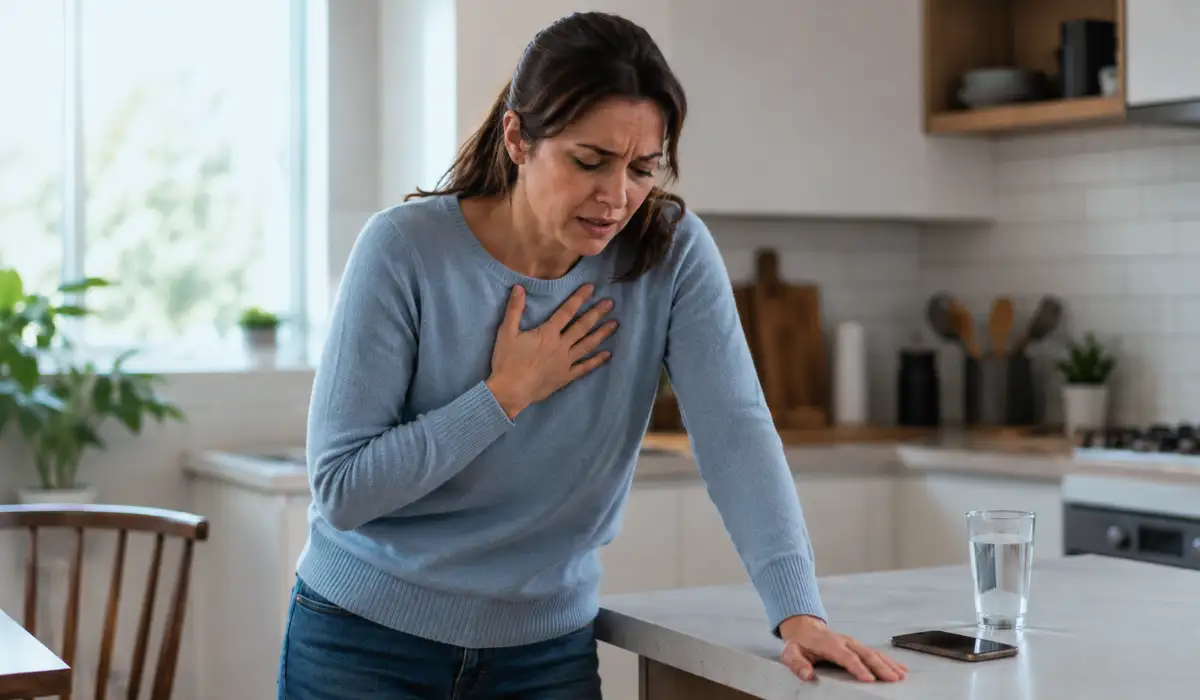
Chest discomfort is still the most frequently reported symptom in women, just as it is in men. But it doesn’t always show up as sharp, stabbing pain. Many women describe it as pressure, tightness, or a heavy squeezing sensation in the center of the chest that can last several minutes or fade and return.
Beyond chest discomfort, women commonly report:
- Shortness of breath, with or without any chest pain
- Pain or aching in the back, neck, jaw, or one or both arms
- Nausea, vomiting, or indigestion-like discomfort
- Breaking out in a cold sweat for no clear reason
- Lightheadedness or sudden dizziness
- Unusual, overwhelming fatigue that doesn’t improve with rest
These symptoms can appear gradually over hours or even days, rather than hitting all at once, which makes them easy to brush off as something minor.
The Symptoms Women Tend To Overlook
Because so many of these warning signs overlap with everyday complaints, women frequently mistake them for something far less serious. Heartburn, the flu, stress, poor sleep, or simply getting older are common explanations women give themselves before they consider their heart.
Extreme tiredness is one of the most under-recognized red flags. This isn’t the normal exhaustion after a long day. It’s a sudden, heavy fatigue that can make routine tasks like climbing stairs or carrying groceries feel unexpectedly draining.
Upper back pain is another symptom that rarely gets connected to the heart. Some women describe it as a tight band or rope sensation across the upper back, distinct from typical muscle soreness.
Digestive discomfort is also frequently dismissed. Nausea, stomach pain, or a heartburn-like burning sensation can easily be mistaken for a digestive issue, especially when chest pain isn’t present at all.
Risk Factors Every Woman Should Know
Several factors raise a woman’s risk of heart disease, and some affect women more severely than they affect men. These include high blood pressure, high cholesterol, diabetes, smoking, obesity, a sedentary lifestyle, and a family history of heart disease.
Conditions unique to women, such as complications during pregnancy (including preeclampsia and gestational diabetes), early menopause, and certain autoimmune conditions, can also increase long-term cardiovascular risk.
Mental health plays a bigger role than many people realize. Chronic stress, anxiety, and depression have all been linked to a higher risk of heart disease in women, making emotional wellbeing an important part of heart health, not just a separate concern.
When To Call 911?
If you notice chest pressure, unexplained shortness of breath, sudden cold sweats, or a combination of symptoms like nausea and jaw or back pain, don’t wait to see if it passes. Call 911 immediately rather than driving yourself to the hospital.
Emergency responders can begin treatment the moment they arrive, and getting to an emergency room quickly gives doctors the best chance to limit damage to the heart muscle.
It’s also worth remembering that not every heart attack symptom needs to be severe to be serious. A combination of milder symptoms, especially when they’re new or unexplained, deserves the same urgency as classic chest pain.
Protecting Your Heart For The Long Run
The encouraging news is that heart disease is largely preventable through consistent, manageable lifestyle habits. Eating a diet rich in vegetables, fruits, whole grains, and lean protein while limiting processed foods, added sugar, and excess sodium supports long-term heart health. Regular physical activity, ideally a mix of aerobic exercise and strength training, helps keep blood pressure, cholesterol, and weight in healthy ranges.
Quitting smoking offers one of the fastest improvements to cardiovascular risk, with measurable benefits appearing within just a year of stopping. Routine checkups that monitor blood pressure, cholesterol, and blood sugar allow potential problems to be caught and managed early, before they become emergencies.
Recognizing the subtle, sometimes confusing ways a heart attack can present in women isn’t about creating fear. It’s about giving women the confidence to trust their bodies and act quickly when something feels wrong.
Knowing the signs, understanding personal risk factors, and never hesitating to seek emergency care when symptoms appear can make all the difference between a close call and a tragedy.
Frequently Asked Questions
Chest discomfort, such as pressure or tightness, is still the most common first symptom in women. However, many women notice subtler signs first, like unusual fatigue, shortness of breath, or nausea, sometimes days before a heart attack occurs.
Yes. Women in particular can experience a heart attack with little or no chest pain. Symptoms like jaw or back pain, breaking out in a cold sweat, lightheadedness, or extreme fatigue can occur on their own and still signal a heart attack.
Because many symptoms, like fatigue, indigestion, or back pain, resemble common, less serious conditions, women often attribute them to stress, aging, or minor illness rather than considering their heart. This can lead to dangerous delays in seeking care.
Call 911 immediately rather than driving yourself to the hospital. Emergency responders can begin treatment right away, and getting to an emergency room quickly helps limit damage to the heart muscle.
Stress and anxiety can produce symptoms that overlap with heart attack warning signs, such as shortness of breath or chest tightness. Since the two can be difficult to tell apart, it’s safest to seek medical evaluation for any new or unexplained symptoms rather than assuming it’s stress.
Yes. Estrogen offers some protective effect on the cardiovascular system, so the risk of heart disease tends to rise after menopause. Other factors, including high blood pressure, high cholesterol, and family history, can further increase risk during this stage of life.
Reference:
- American Heart Association – Warning Signs of a Heart Attack
https://www.heart.org/en/health-topics/heart-attack/warning-signs-of-a-heart-attack - CDC – Heart Disease Facts and Women’s Heart Health
https://www.cdc.gov/heartdisease/women.htm - National Heart, Lung, and Blood Institute (NHLBI) – Heart Attack
https://www.nhlbi.nih.gov/health/heart-attack
Related Articles: