
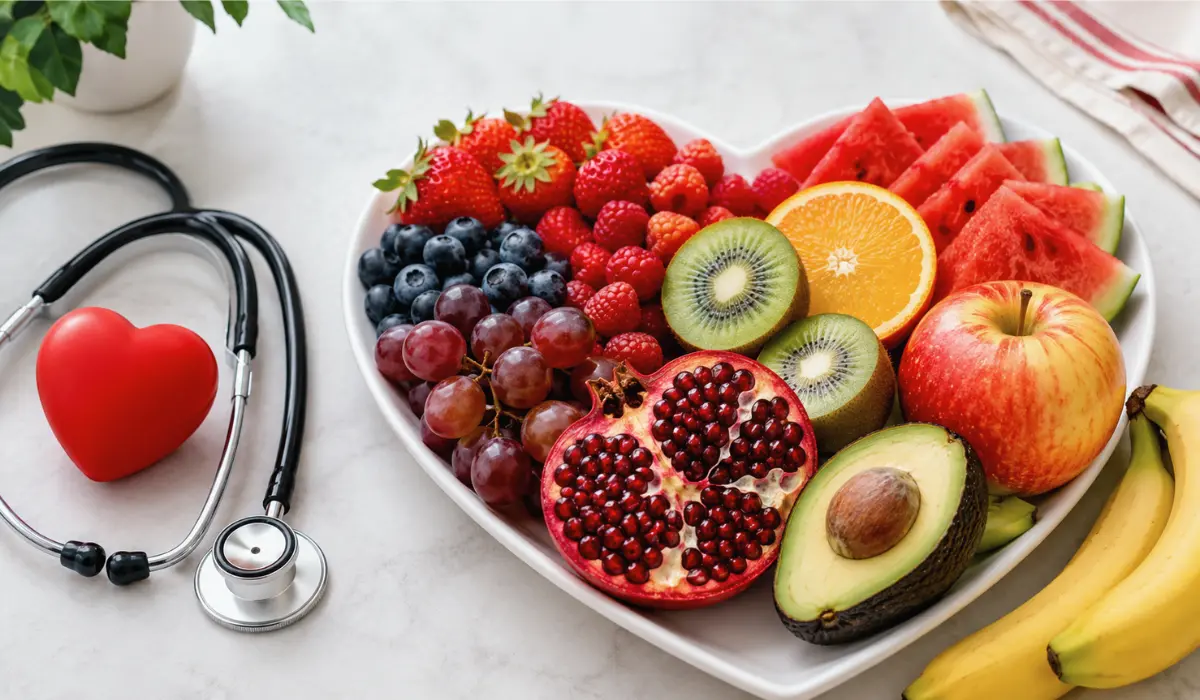
The best fruits for heart health are fruits rich in fiber, potassium, antioxidants, vitamin C, and polyphenols. These nutrients may support healthy blood pressure, better cholesterol balance, blood vessel function, and overall cardiovascular wellness.
Fruits alone cannot prevent or treat heart disease. However, adding the right fruits to a balanced diet can be a simple daily step toward better heart health. The American Heart Association recommends eating a variety of fruits and vegetables and suggests about 2 cups of fruit per day as part of a heart-healthy eating pattern.
Why Fruits Are Good For Heart Health?
Fruits help the heart in several ways. First, many fruits contain dietary fiber, which may help support healthy cholesterol and blood sugar levels. In addition, fruits provide potassium, a mineral that helps balance sodium and supports healthy blood pressure. The CDC notes that too much sodium and too little potassium can raise blood pressure.
Fruits also contain antioxidants such as vitamin C, anthocyanins, flavonoids, and polyphenols. These plant compounds may help protect blood vessels from oxidative stress and inflammation. Harvard’s Nutrition Source also notes that diets rich in fruits and vegetables may help lower blood pressure and reduce the risk of heart disease and stroke.
Best Fruits For Heart Health
| Fruit | Key Heart Nutrients | Why It Supports Heart Health |
|---|---|---|
| Berries | Fiber, anthocyanins, vitamin C | May support blood vessel health and reduce oxidative stress |
| Apples | Pectin fiber, polyphenols | May support cholesterol and blood sugar control |
| Oranges | Vitamin C, potassium, flavonoids | May support blood pressure and antioxidant protection |
| Bananas | Potassium, vitamin B6, fiber | Helps support healthy blood pressure balance |
| Avocado | Potassium, fiber, healthy fats | Supports cholesterol-friendly eating patterns |
| Pomegranate | Polyphenols, antioxidants | May support blood vessel function |
| Grapes | Resveratrol, flavonoids | May help protect blood vessels from oxidative stress |
| Kiwi | Vitamin C, fiber, potassium | Supports antioxidant defense and blood pressure balance |
| Papaya | Vitamin C, vitamin A, fiber | Supports inflammation control and overall heart nutrition |
| Watermelon | Lycopene, water, potassium | Helps hydration and provides heart-supporting antioxidants |
1. Berries
Berries are among the top fruits for heart health. Blueberries, strawberries, raspberries, and blackberries contain fiber and antioxidants called anthocyanins. These compounds give berries their red, blue, and purple colors.
Blueberries are especially known for their anthocyanin content. Research published in the journal Advances in Nutrition describes blueberries as one of the richest sources of anthocyanins among common fruits.
Berries are also low in calories and naturally sweet. They can be added to oatmeal, yogurt, smoothies, or eaten as a snack.
2. Apples
Apples are simple, affordable, and heart-friendly. They contain soluble fiber called pectin, which may help support healthy cholesterol levels. Apple skin also contains polyphenols, so eating the whole apple is usually better than peeling it.
A medium apple provides around 4 grams of fiber, making it a useful fruit for digestive and heart health.
For the best benefit, choose fresh apples instead of apple juice. Whole fruit contains more fiber and helps you feel full for longer.
3. Oranges And Citrus Fruits
Oranges, grapefruit, lemons, and other citrus fruits are rich in vitamin C and flavonoids. These nutrients may support blood vessel health and reduce oxidative stress.
A medium orange is also a good source of fiber and potassium. Eating whole oranges is generally better than drinking orange juice because whole fruit contains more fiber and less concentrated sugar.
However, grapefruit may interact with some cholesterol and blood pressure medicines. Therefore, people taking prescription medications should ask their doctor before eating grapefruit regularly.
4. Bananas
Bananas are well known for their potassium content. Potassium helps the body manage sodium balance, which is important for healthy blood pressure. One medium banana contains about 422 mg of potassium.
Bananas are also easy to digest and convenient for breakfast or snacks. However, people who need to limit potassium because of kidney disease should not increase banana intake without medical advice.
5. Avocado
Although avocado is often used like a vegetable, it is technically a fruit. It contains fiber, potassium, and monounsaturated fats. These healthy fats can fit well into a heart-supportive diet when used instead of butter, cream, or processed spreads.
Avocado may help make meals more filling. For example, adding avocado to whole-grain toast, salads, or wraps can improve nutrient quality without relying on fried or processed foods.
6. Pomegranate
Pomegranate is rich in polyphenols, which are antioxidant plant compounds. These compounds may support blood vessel function and help reduce oxidative stress.
Fresh pomegranate seeds can be added to salads, yogurt, smoothie bowls, or oatmeal. Pomegranate juice is also popular, but it is better to choose unsweetened juice and keep portions moderate because juice lacks the fiber of whole fruit.
7. Grapes
Red and purple grapes contain flavonoids and resveratrol. These antioxidants may support blood vessel health and help protect cells from oxidative stress.
Grapes are also easy to add to a heart-friendly diet. They can be eaten fresh, frozen, or added to salads. However, grape juice and sweetened grape products should be limited because they can be high in sugar.
8. Kiwi
Kiwi is a nutrient-dense fruit that provides vitamin C, fiber, and potassium. Vitamin C supports antioxidant protection, while fiber supports cholesterol and digestive health.
Kiwi is also a good choice for people who want a sweet fruit with a refreshing taste. It can be eaten alone, added to fruit salad, or blended into smoothies.
9. Papaya
Papaya contains vitamin C, vitamin A, folate, and fiber. These nutrients support overall heart wellness, immune health, and healthy digestion.
Papaya is naturally sweet and soft, making it easy to eat. It can be used in breakfast bowls, smoothies, or fresh fruit plates.
10. Watermelon
Watermelon is hydrating and contains lycopene, an antioxidant also found in tomatoes. Lycopene may support heart and blood vessel health as part of an overall healthy diet.
Watermelon also provides potassium and water, making it a refreshing fruit for hot days. However, portion control is still important, especially for people watching blood sugar levels.
Whole Fruit vs Fruit Juice
Whole fruit is usually better than fruit juice for heart health. Whole fruit contains fiber, which slows digestion and helps control appetite. Juice often contains concentrated natural sugar and lacks much of the fiber.
Harvard Health also notes that fruit juice did not show the same longevity benefits as whole fruits and vegetables in research summaries. Healthier fruit choices include berries and citrus fruits.
How Much Fruit Should You Eat Daily?
For most adults, about 1.5 to 2 cups of fruit per day is a practical target. The CDC reports that adults should consume 1.5–2 cup-equivalents of fruits daily along with vegetables as part of a healthy eating pattern.
A simple daily plan may include:
- 1 apple or orange with breakfast
- 1 cup of berries with yogurt or oatmeal
- 1 banana or kiwi as a snack
- Pomegranate or grapes in a salad
Tips To Choose Heart-Healthy Fruits
Choose fresh, frozen, or unsweetened canned fruits when possible. Also, avoid fruits packed in heavy syrup. When buying dried fruit, check portions because dried fruits are calorie-dense and may contain added sugar.
In addition, try to eat a variety of colors. Red, blue, purple, orange, and green fruits provide different antioxidants and nutrients. Overall, variety is better than relying on one “superfruit.”
Fruits To Limit For Heart Health
Most whole fruits can fit into a heart-friendly diet. However, some fruit products should be limited. These include sweetened fruit juice, fruit-flavored drinks, canned fruit in syrup, candied fruit, and desserts with fruit filling.
People with diabetes should also watch fruit portions and pair fruit with protein or healthy fats when needed. For example, berries with Greek yogurt or apple slices with nut butter may be more balanced than fruit juice alone.
Conclusion
The best fruits for heart health include berries, apples, oranges, bananas, avocado, pomegranate, grapes, kiwi, papaya, and watermelon. These fruits provide fiber, potassium, vitamin C, and antioxidants that may support blood pressure, cholesterol, blood vessel health, and overall cardiovascular wellness.
However, heart health depends on the full diet, not one fruit alone. For the best results, eat whole fruits regularly, limit sugary fruit products, reduce sodium, stay active, and follow medical advice if you have heart disease, diabetes, kidney disease, or high blood pressure.
FAQs
Berries are among the best fruits for heart health because they contain fiber, vitamin C, and anthocyanin antioxidants that support blood vessel health.
Yes, bananas can support heart health because they contain potassium, which helps balance sodium and supports healthy blood pressure levels.
Yes, apples are heart-friendly because they contain soluble fiber, especially pectin, which may help support healthy cholesterol and blood sugar control.
Bananas, oranges, kiwi, avocado, and watermelon may support healthy blood pressure because they provide potassium and other heart-supporting nutrients.
Whole fruit is usually better than fruit juice because it contains fiber. Fruit juice can be high in natural sugar and should be consumed in small amounts.
References
1. American Heart Association
Fruits and Vegetables Serving Sizes
https://www.heart.org/en/healthy-living/healthy-eating/add-color/fruits-and-vegetables-serving-sizes
2. Centers for Disease Control and Prevention
Adults Meeting Fruit and Vegetable Intake Recommendations
https://www.cdc.gov/mmwr/volumes/71/wr/mm7101a1.htm
3. Harvard T.H. Chan School of Public Health
Vegetables and Fruits
https://nutritionsource.hsph.harvard.edu/what-should-you-eat/vegetables-and-fruits/
4. Mayo Clinic
Heart-Healthy Diet: 8 Steps to Prevent Heart Disease
https://www.mayoclinic.org/diseases-conditions/heart-disease/in-depth/heart-healthy-diet/art-20047702
5. Harvard Health Publishing
Heart-Healthy Foods: What to Eat and What to Avoid
https://www.health.harvard.edu/heart-health/heart-healthy-foods-what-to-eat-and-what-to-avoid