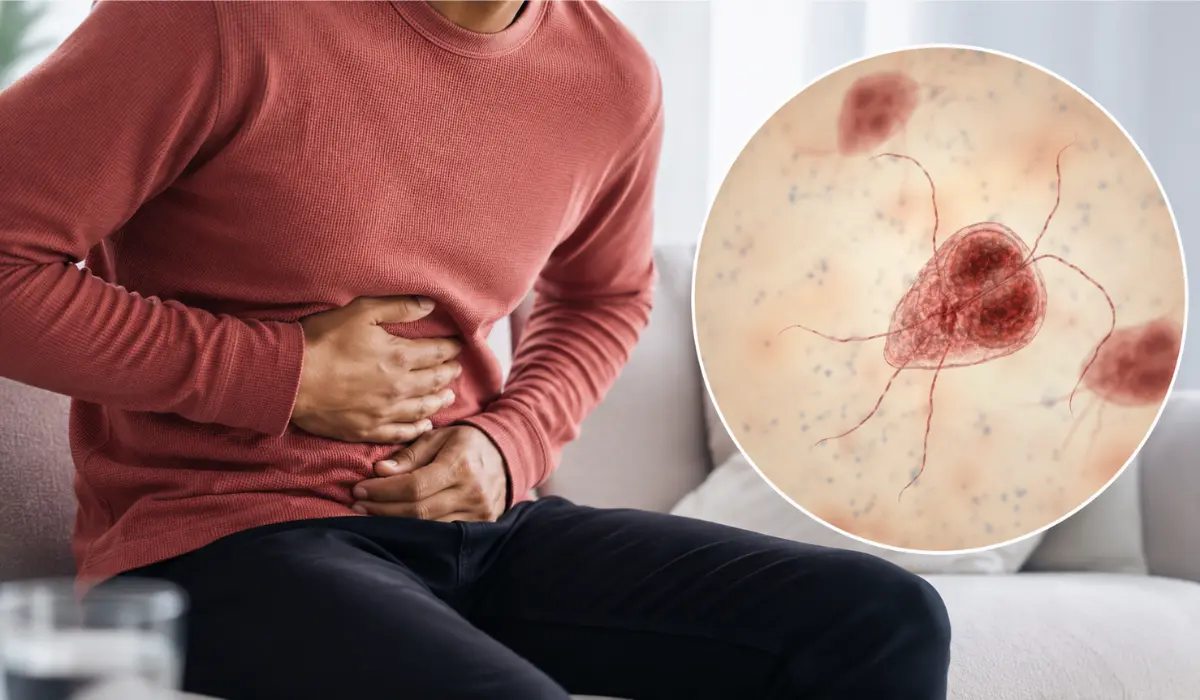
Giardia vs food poisoning means comparing a parasitic intestinal infection with a general illness caused by contaminated food or drink. Giardia is caused by a parasite that infects the small intestine, while food poisoning can happen from bacteria, viruses, parasites, toxins, or chemicals.
Both problems can cause diarrhea, stomach cramps, nausea, bloating, and dehydration, so they may feel similar at first. The main differences often appear in the timing, stool changes, symptom duration, and recent exposure to unsafe water, spoiled food, travel, or poor hygiene.
What Is Giardia?
Giardia, also called giardiasis, is an intestinal infection caused by the parasite Giardia duodenalis. The parasite enters the body when a person swallows tiny Giardia germs from contaminated water, food, surfaces, or hands. It can also spread in childcare settings, during travel, through unsafe drinking water, or after swallowing lake, river, or pool water.
Giardia affects the small intestine. Some people do not feel sick, but they can still carry and spread the parasite through stool. When symptoms appear, they often include watery or greasy diarrhea, gas, stomach cramps, bloating, nausea, tiredness, and weight loss.
What Is Food Poisoning?
Food poisoning is an illness caused by eating or drinking something contaminated. The contamination may come from bacteria, viruses, parasites, toxins, mold, or harmful chemicals. Common symptoms include upset stomach, vomiting, loose stools, stomach pain, cramps, and fever.
Food poisoning can happen when food is undercooked, stored at unsafe temperatures, handled with unwashed hands, or prepared on contaminated surfaces. Raw poultry, seafood, eggs, unpasteurized dairy, unsafe water, and unwashed produce may increase the risk.
Giardia vs Food Poisoning: Main Differences
The biggest difference is that Giardia is one specific parasitic infection, while food poisoning is a general term for many illnesses caused by contaminated food or drink.
Giardia symptoms usually start later. Many people develop symptoms about 1 to 3 weeks after exposure. Food poisoning symptoms often start within hours or days, depending on the germ or toxin involved. In some cases, foodborne illness can also take longer to appear.
Giardia also tends to last longer. Symptoms may continue for 2 to 6 weeks, and some people have symptoms that come back. Food poisoning often improves within a couple of days for many people, although some infections can last longer or become serious.
Giardia Symptoms
Giardia often causes:
- Watery diarrhea
- Greasy, foul-smelling stools
- Gas and bloating
- Stomach cramps
- Nausea
- Tiredness
- Loss of appetite
- Weight loss
One clue is stool that looks greasy, floats, or smells unusually bad. Giardia can interfere with digestion and nutrient absorption, which may explain weight loss, fatigue, and long-lasting stomach problems.
Food Poisoning Symptoms
Food poisoning often causes:
- Nausea
- Vomiting
- Diarrhea
- Stomach cramps
- Fever
- Chills
- Body weakness
- Dehydration
Vomiting is often more common and more sudden with food poisoning, especially when toxins or certain viruses are involved. Bloody diarrhea, high fever, or severe weakness can suggest a more serious infection and needs medical attention.
How Quickly Do Symptoms Start?
Timing can give an important clue.
Giardia usually does not cause symptoms right away. Many people feel sick days to weeks after exposure, especially after drinking unsafe water, swimming, camping, or traveling.
Food poisoning may start much faster. Some toxin-related food poisoning can begin within a few hours. Other infections may take 1 to 3 days or longer, so the last meal you ate is not always the cause. The CDC notes that contaminated food may take 2 to 3 days to cause illness, and sometimes longer.
How Long Do They Last?
Giardia may last for several weeks without treatment. Some people continue to have bloating, loose stools, or lactose intolerance even after the infection improves.
Food poisoning often improves within 48 hours for many people with mild illness. Treatment usually focuses on replacing fluids and electrolytes. Severe cases may need medical care, testing, antibiotics, antiparasitic medicine, or IV fluids.
Common Giardia Risk Factors
You may have a higher risk of Giardia if you:
- Drink untreated water from lakes, rivers, wells, or streams
- Swallow water while swimming
- Travel to areas with unsafe water or poor sanitation
- Work in or attend childcare
- Have close contact with someone who has diarrhea
- Handle diapers or contaminated surfaces
- Eat food handled by someone with poor hand hygiene
Giardia spreads easily because swallowing only a small amount of the parasite can make someone sick. It can spread through water, food, objects, surfaces, and person-to-person contact.
Common Food Poisoning Risk Factors
You may have a higher risk of food poisoning if you:
- Eat undercooked meat, poultry, seafood, or eggs
- Eat food left at room temperature too long
- Drink unpasteurized milk or juice
- Eat unwashed fruits or vegetables
- Use contaminated cutting boards or utensils
- Eat food prepared by someone who did not wash their hands
- Have a weakened immune system
Children, older adults, pregnant people, and people with weakened immune systems have a higher risk of severe illness from foodborne infections.
Diagnosis: How Doctors Tell The Difference?
Doctors may ask about your symptoms, recent meals, travel, swimming, camping, sick contacts, and water exposure. They may also order a stool test.
For suspected Giardia, stool testing can check for the parasite. Sometimes more than one sample is needed because the parasite may not appear in every stool sample. The CDC says healthcare providers may request stool samples to see whether Giardia is causing the illness.
For food poisoning, testing depends on severity. A healthcare provider may test stool or blood, especially if symptoms are severe, bloody, long-lasting, or linked to a possible outbreak.
Treatment Options
Giardia often needs prescription antiparasitic drugs, especially when symptoms are strong or long-lasting. A healthcare provider can decide which medicine is right based on age, pregnancy status, health history, and symptom severity.
Food poisoning treatment depends on the cause. Many mild cases improve with rest, fluids, and oral rehydration. Antibiotics may help some bacterial infections, but they are not needed for every case. Antiparasitic medicines may be used if a parasite causes the illness.
Do not use anti-diarrhea medicine if you have bloody diarrhea, high fever, or suspected serious infection unless a healthcare provider says it is safe.
When To Seek Medical Help?
Get medical care if you have:
- Diarrhea lasting more than 3 days
- Loose stools, cramps, bloating, or nausea lasting more than a week
- Blood or pus in stool
- High fever
- Frequent vomiting
- Severe stomach pain
- Signs of dehydration
- Dizziness, confusion, dry mouth, or little urination
- Symptoms after unsafe water exposure or international travel
Medical care for adults with nervous system symptoms, high fever, frequent vomiting, diarrhea lasting more than three days, or dehydration symptoms.
Prevention Tips
To reduce the risk of Giardia and food poisoning, wash your hands before eating, after using the bathroom, after changing diapers, and after touching animals. Use safe water for drinking, brushing teeth, washing produce, and preparing food.
Avoid swallowing water from pools, lakes, rivers, and streams. Boil or properly filter wilderness water before drinking it. Boil lake or river water for at least 1 minute, or 3 minutes at elevations above 6,500 feet.
For food safety, cook foods to safe temperatures, refrigerate leftovers quickly, wash produce, separate raw meat from ready-to-eat foods, and clean cutting boards and utensils properly.
Final Verdict
Giardia vs food poisoning can be confusing because both can cause diarrhea, cramps, nausea, and dehydration. Giardia is a specific parasite that often causes delayed, longer-lasting symptoms with bloating, gas, greasy stools, and fatigue. Food poisoning is broader and may start faster, especially when bacteria, viruses, or toxins are involved.
If symptoms are severe, long-lasting, bloody, or linked to unsafe water or travel, seek medical care. A stool test can help identify the cause and guide the right treatment.
FAQs
Yes. Giardia can cause diarrhea, nausea, cramps, and bloating, which may feel like food poisoning. The main clue is longer-lasting symptoms and possible greasy stools.
Both can become serious if they cause dehydration or affect vulnerable people. Food poisoning may become urgent with blood, high fever, severe weakness, or nervous system symptoms.
Giardia can cause nausea and sometimes vomiting, but bloating, gas, cramps, and watery or greasy diarrhea are often more noticeable symptoms.
Giardia is more likely if diarrhea lasts more than a week, smells bad, looks greasy, or follows camping, swimming, unsafe water, travel, or childcare exposure.
Many mild food poisoning cases improve with fluids and rest. Medical care is needed for severe symptoms, dehydration, blood in stool, high fever, or prolonged diarrhea.
Yes. Giardia can spread through stool-contaminated hands, surfaces, food, water, or close contact. Careful handwashing and cleaning help reduce household spread.
1. Centers for Disease Control and Prevention (CDC)
About Giardia Infection
https://www.cdc.gov/giardia/about/index.html
2. Centers for Disease Control and Prevention (CDC)
Food Poisoning Symptoms
https://www.cdc.gov/food-safety/signs-symptoms/index.html
3. Mayo Clinic
Food Poisoning: Symptoms and Causes
https://www.mayoclinic.org/diseases-conditions/food-poisoning/symptoms-causes/syc-20356230
Recent Post