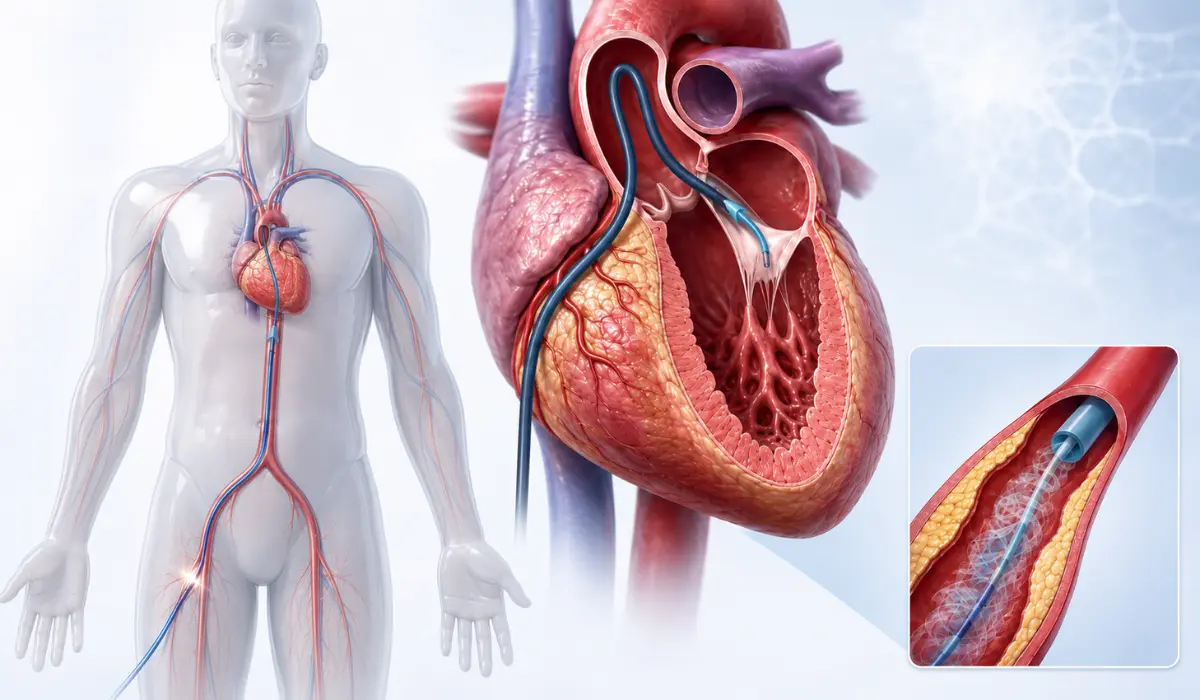
Left heart catheterization helps doctors examine the left side of the heart and coronary arteries for diagnosis. During the procedure, a thin, flexible catheter enters through a blood vessel in the wrist, arm, or groin and moves carefully toward the heart.
Doctors may use this test to check for blocked arteries, valve problems, heart muscle weakness, or other heart conditions. Although it may sound serious, it is commonly performed and usually low risk when trained heart specialists follow proper preparation, monitoring, and recovery steps.
What Is Left Heart Catheterization?
Left heart catheterization checks the left side of the heart, especially the left ventricle and the arteries that supply blood to the heart muscle. The left ventricle is the main pumping chamber that sends oxygen-rich blood to the body.
During the procedure, the doctor guides a catheter through an artery. This is different from some other heart tests that use veins. Once the catheter reaches the heart, the doctor may measure pressure, inject contrast dye, take X-ray images, or check how blood moves through the heart.
In many cases, left heart catheterization includes coronary angiography. A coronary angiogram uses contrast dye and X-ray imaging to show whether the coronary arteries are narrowed or blocked.
Why Is Left Heart Catheterization Done?
Doctors may recommend left heart catheterization when symptoms, test results, or medical history suggest a possible heart problem. It gives more detailed information than many noninvasive tests.
Common reasons include:
| Reason | What the Doctor May Be Checking |
|---|---|
| Chest pain or pressure | Blocked or narrowed coronary arteries |
| Shortness of breath | Heart failure, valve disease, or poor pumping function |
| Abnormal stress test | Reduced blood flow to the heart muscle |
| Suspected heart attack | Urgent artery blockage |
| Heart valve disease | Pressure changes or valve narrowing/leakage |
| Weak heart pumping | Left ventricle function |
| Before heart surgery | Artery and valve condition |
Cardiac catheterization may help diagnose coronary artery disease, heart valve disease, heart failure, congenital heart disease, and other heart conditions.
Left Heart Catheterization vs Right Heart Catheterization
Left heart catheterization and Right Heart Catheterization are related tests, but they examine different areas. The left-sided test checks coronary arteries and heart function, while Right Heart Catheterization measures right-sided heart and lung pressures to guide diagnosis and treatment decisions.
| Feature | Left Heart Catheterization | Right Heart Catheterization |
| Main area checked | Left ventricle and coronary arteries | Right side of heart and lung pressures |
| Blood vessel used | Usually an artery | Usually a vein |
| Common purpose | Find artery blockages or left-sided heart issues | Measure lung artery pressure and oxygen levels |
| Imaging | Often uses contrast dye and X-rays | May or may not use dye |
| Common conditions checked | Coronary artery disease, valve disease, heart attack | Pulmonary hypertension, heart failure, shock |
Sometimes doctors perform both tests during the same visit if they need a complete picture of heart function.
How To Prepare For Left Heart Catheterization?
Preparation depends on your health condition and whether the procedure is planned or urgent. For a scheduled test, your healthcare team may give instructions about food, medications, allergies, and transportation.
You may be asked to:
- Avoid eating or drinking for several hours before the test.
- Tell your doctor about blood thinners, diabetes medicines, or kidney problems.
- Mention any allergy to contrast dye, iodine, latex, or medications.
- Bring a list of your current medicines and supplements.
- Arrange someone to drive you home after the procedure.
People with kidney disease, contrast dye allergy, bleeding disorders, or diabetes may need extra planning before the procedure.
What Happens During The Procedure?
Left heart catheterization usually happens in a cardiac catheterization lab. You may stay awake, but the care team may give medicine to help you relax. The doctor numbs the wrist, groin, or arm area before placing a thin catheter into an artery.
The catheter is gently guided toward the heart using X-ray imaging. If contrast dye is used, you may feel a brief warm sensation. The doctor may take pictures, measure pressure, or check blood flow through the heart and coronary arteries.
If a blockage appears, angioplasty or stent placement may be done during the same procedure, depending on the condition.
Does Left Heart Catheterization Hurt?
Most people do not feel the catheter moving inside the blood vessel. You may feel pressure, mild discomfort, or a brief sting when the numbing medicine is injected. Some people feel warmth when contrast dye enters the body.
Tell the care team right away if you feel chest pain, trouble breathing, dizziness, itching, swelling, or severe discomfort during the procedure.
What Can The Results Show?
Left heart catheterization can give important information about heart structure and blood flow.
| Result Finding | Possible Meaning |
| Normal coronary arteries | No major artery blockage seen |
| Narrowed coronary artery | Possible coronary artery disease |
| Complete blockage | Possible heart attack-related artery closure |
| High left-sided pressure | Possible heart failure or valve disease |
| Weak left ventricle movement | Reduced pumping function |
| Abnormal valve pressure | Possible valve narrowing or leakage |
Your doctor will explain what the results mean for your symptoms. Treatment may include lifestyle changes, medicines, angioplasty, stent placement, valve treatment, or surgery.
Risks Of Left Heart Catheterization
Left heart catheterization is generally safe, but it is still an invasive procedure. Minor risks may include bruising, bleeding, soreness, infection, nausea, or reaction to contrast dye. Major complications are rare but can happen.
Possible risks include:
- Bleeding at the catheter site
- Bruising or swelling
- Blood vessel injury
- Irregular heartbeat
- Allergic reaction to contrast dye
- Kidney problems from contrast dye
- Infection
- Blood clot
- Heart attack or stroke in rare cases
Your personal risk depends on your age, kidney function, heart condition, medications, and overall health.
Recovery After Left Heart Catheterization
After left heart catheterization, the care team monitors your blood pressure, pulse, symptoms, and access site. If the catheter entered through the wrist, you may wear a pressure band. If it entered through the groin, you may need to lie flat.
Most people return home the same day after a diagnostic procedure. A longer stay may be needed if a stent was placed, complications occurred, or the heart condition needs closer observation.
At home, rest, drink fluids if allowed, avoid heavy lifting, and keep the area clean and dry. Follow medicine instructions and attend follow-up visits for results.
When To Call A Doctor?
Seek medical help quickly if you notice warning signs after left heart catheterization.
Call your doctor or emergency services if you have:
- Chest pain
- Shortness of breath
- Fainting or severe dizziness
- Heavy bleeding from the access site
- Swelling that gets worse
- Severe pain in the arm or leg used for the catheter
- Numbness, coldness, or color change in the limb
- Fever or signs of infection
- New weakness, confusion, or trouble speaking
These symptoms may signal a complication that needs urgent care.
How Serious Is Left Heart Catheterization?
Left heart catheterization is serious because it involves the heart, arteries, X-ray imaging, and sometimes contrast dye. However, it is also a routine heart procedure that doctors use often to diagnose and treat heart problems.
For many people, the benefits outweigh the risks because the test can show life-threatening artery blockages or guide treatment decisions. The seriousness depends on why the procedure is being done. An emergency catheterization during a heart attack is more urgent than a planned test after an abnormal stress test.
How To Support Heart Health After The Procedure?
After left heart catheterization, your doctor may recommend a heart health plan based on your results. This may include better blood pressure control, cholesterol management, diabetes care, regular physical activity, smoking cessation, and heart-healthy eating.
Simple habits can support long-term heart health:
- Eat more fruits, vegetables, whole grains, and lean proteins.
- Limit trans fats, excess salt, and highly processed foods.
- Take prescribed medicines as directed.
- Keep follow-up appointments.
- Ask your doctor when it is safe to exercise again.
- Manage stress and sleep quality.
- Stop smoking if you smoke.
If the test shows coronary artery disease, your care plan may include stronger prevention steps to lower the risk of heart attack or future artery narrowing.
Frequently Asked Questions
Left heart catheterization is a procedure that lets doctors examine the left side of the heart and coronary arteries using a thin catheter. It helps diagnose blockages, valve problems, and heart function concerns.
Most people do not feel sharp pain during left heart catheterization because the access area is numbed. You may feel pressure, mild soreness, or warmth when contrast dye is injected.
A diagnostic left heart catheterization often takes about 30 to 60 minutes, but timing can vary. It may take longer if angioplasty, stenting, or extra imaging is needed during the same visit.
A doctor may order it for chest pain, shortness of breath, abnormal stress test results, suspected coronary artery disease, or heart valve concerns. The test shows blood flow and heart function clearly.
Possible risks include bruising, bleeding, infection, blood vessel injury, irregular heartbeat, contrast dye reaction, kidney strain, stroke, or heart attack. Serious complications are uncommon, but your personal risk depends on your health.
After the procedure, nurses monitor your pulse, blood pressure, and access site. Most people rest the same day, avoid heavy lifting, keep the area clean, and follow medicine instructions carefully.
References
1. Cleveland Clinic
Cardiac Catheterization: Procedure & Recovery
https://my.clevelandclinic.org/health/diagnostics/16832-cardiac-catheterization
2. NCBI Bookshelf
Left Heart Catheterization
https://www.ncbi.nlm.nih.gov/books/NBK564323/
3. Mayo Clinic
Cardiac Catheterization
https://www.mayoclinic.org/tests-procedures/cardiac-catheterization/about/pac-20384695