
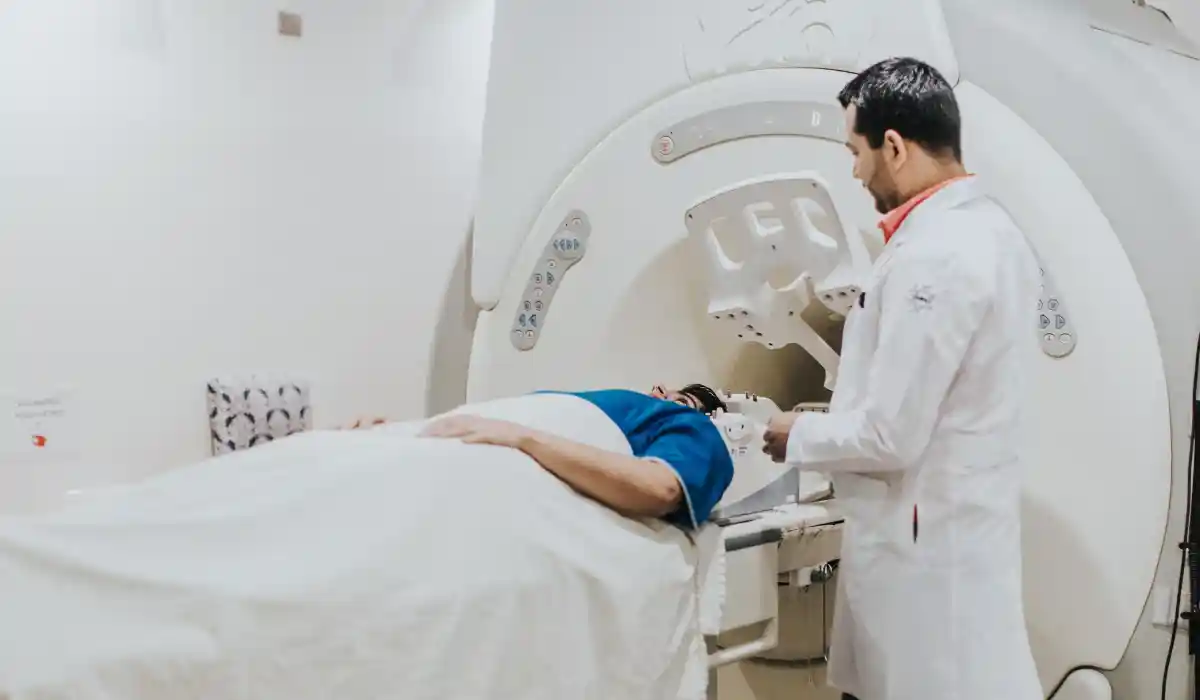
A doctor may order an MRI of the prostate to get clearer pictures of the prostate gland, especially when PSA levels, symptoms, biopsy results, or a physical exam raise questions. The scan can help check for suspicious areas, prostate cancer, infection, enlargement, or cancer spread.
A prostate MRI does not always mean you have cancer. It is a detailed imaging test that helps doctors decide what may be happening and what steps make sense next.
Doctors often use prostate MRI before a biopsy, after an abnormal PSA test, during cancer staging, or while monitoring known prostate cancer. The goal is to get better information before choosing treatment or follow-up care.
Why Would a Doctor Order an MRI of the Prostate?
A prostate MRI uses a strong magnet and radio waves to create detailed images of the prostate and nearby tissues. The prostate is a small gland below the bladder that helps produce semen.
Doctors may order this scan when they need more detail than a blood test, urine test, ultrasound, or digital rectal exam can provide. MRI can show the size, shape, and structure of the prostate more clearly.
The scan may help find suspicious areas that need closer review. It may also help doctors decide whether a prostate biopsy is needed or where biopsy samples should be taken.
In simple terms, an MRI gives doctors a closer look before they make important decisions. It can reduce guesswork and help guide the next step in care.
Why Prostate MRI Matters?
Prostate problems can cause worry because symptoms often overlap. Frequent urination, weak urine flow, pelvic discomfort, or a high PSA level may happen for several reasons.
An enlarged prostate, infection, inflammation, or cancer can all affect prostate health. MRI can help doctors separate some of these possibilities and decide what needs attention.
This matters because not every prostate concern needs immediate treatment. Some findings need monitoring, while others may need a biopsy, medication, or specialist care.
For men already diagnosed with prostate cancer, MRI can help show whether the cancer appears limited to the prostate or may have reached nearby tissues. This information can support treatment planning.
A clearer diagnosis can also reduce unnecessary delays. When doctors understand the situation better, they can recommend safer and more practical next steps.
Key Reasons a Doctor May Order a Prostate MRI
One common reason is a raised PSA level. PSA is a blood marker linked to the prostate, but a high result does not always mean cancer.
A doctor may also order MRI after an abnormal digital rectal exam. If the prostate feels firm, uneven, or unusual, imaging may help check the area more closely.
Another reason is to guide a prostate biopsy. MRI can help locate suspicious spots, which may allow doctors to target the biopsy more accurately.
Doctors may use MRI after a previous negative biopsy if PSA levels remain high. In that situation, the scan may help look for areas that were missed.
A prostate MRI may also help stage prostate cancer. Staging means checking how far the cancer may have spread and whether nearby tissues are involved.
Some doctors order MRI to monitor low-risk prostate cancer during active surveillance. This approach watches the cancer closely instead of treating it right away.
MRI may also help assess prostatitis, abscess, prostate enlargement, or unusual prostate anatomy when symptoms or other tests do not give a clear answer.
Real-Life Examples or Common Situations
A man may have a PSA test during a routine checkup, and the result comes back higher than expected. His doctor may order a prostate MRI before deciding whether biopsy is needed.
Another person may have urinary symptoms, such as slow urine flow, frequent nighttime urination, or pressure in the pelvic area. MRI may help check the prostate size and nearby structures.
A patient may already have prostate cancer confirmed by biopsy. In that case, MRI can help doctors understand whether the cancer looks contained or more advanced.
Someone may have had a biopsy that did not find cancer, but PSA levels keep rising. A prostate MRI may help identify suspicious areas that need targeted sampling.
Another common situation is active surveillance. If a man has low-risk prostate cancer, his doctor may use MRI along with PSA tests and repeat biopsies to watch for changes.
These examples show that prostate MRI is not used for one reason only. It can support diagnosis, treatment planning, monitoring, and clearer decision-making.
What to Do Before Your Prostate MRI?
Start by reading the preparation instructions from your imaging center. Prostate MRI preparation can vary depending on the hospital, scanner, and whether contrast dye is planned.
You may be told to avoid heavy meals, empty your bowel, or use an enema before the scan. Some centers also ask patients to avoid ejaculation for a short time before prostate MRI.
Tell the imaging team about metal implants, pacemakers, medication patches, kidney disease, allergies, or past reactions to contrast dye. These details help keep the scan safe.
Wear comfortable clothing and leave jewelry, watches, coins, and metal items at home when possible. MRI machines use strong magnets, so metal safety matters.
Ask how long the scan may take and whether contrast dye will be used. Knowing this ahead of time can reduce stress on the day of the appointment.
If you feel anxious in small spaces, tell your doctor before the scan. You may have options such as calming medicine, music, extra support, or a wider MRI scanner.
Common Mistakes to Avoid
Do not assume an MRI order means you have prostate cancer. Doctors often order prostate MRI to gather more information before making a diagnosis.
Avoid ignoring preparation instructions. Bowel gas, movement, or poor preparation can affect image quality and may make the scan less useful.
Do not stop medicines unless your doctor tells you to. Some patients think they need to stop everything before MRI, but that can be unsafe.
Another mistake is forgetting to mention implants or metal devices. Always tell the radiology team about pacemakers, clips, stents, joint replacements, or metal fragments.
Do not skip follow-up after the MRI. The scan result needs medical interpretation, and your doctor may compare it with PSA levels, symptoms, and past tests.
Avoid reading the MRI report alone and assuming the worst. Terms like lesion, PI-RADS, enlargement, or inflammation need context from a doctor.
When to Call Your Doctor Before a Prostate MRI?
Call your doctor or imaging center if you have a pacemaker, metal implant, cochlear implant, or any device that may not be MRI-safe.
You should also call if you have kidney disease and your scan may use contrast dye. Your doctor may need recent kidney function test results.
Contact the radiology team if you are severely claustrophobic or cannot lie still. They may suggest ways to make the scan easier.
Speak with your doctor if you have fever, burning urination, severe pelvic pain, or signs of infection before the appointment. Your scan timing may need review.
Ask for guidance if you recently had a prostate biopsy, surgery, catheter, or urinary procedure. These can affect timing and imaging interpretation.
You should also contact your doctor if you do not understand why the MRI was ordered. A clear explanation can help you feel more prepared and less anxious.
Helpful Comparison Table
| Reason for Prostate MRI | What the Doctor May Be Checking | Possible Next Step |
| High PSA level | Suspicious prostate changes | Repeat PSA, MRI review, or biopsy |
| Abnormal rectal exam | Firm, enlarged, or uneven prostate area | Imaging review or urology referral |
| Before biopsy | Areas that need targeted sampling | MRI-guided or fusion biopsy |
| Previous negative biopsy | Missed suspicious areas | Targeted repeat biopsy |
| Known prostate cancer | Size, location, or possible spread | Treatment planning |
| Active surveillance | Changes over time | Continued monitoring or treatment review |
| Urinary symptoms | Enlargement, inflammation, or other causes | Medication, further testing, or specialist care |
Conclusion
The main reason is to get detailed images when PSA levels, symptoms, exam findings, biopsy results, or known prostate cancer need clearer evaluation.
A prostate MRI can help find suspicious areas, guide biopsy, stage cancer, monitor active surveillance, or check other prostate conditions. It gives doctors more information before recommending treatment or follow-up.
If your doctor orders this scan, ask why it is needed, how to prepare, and when you will receive results. Good preparation and clear follow-up can make the process easier and more useful.
FAQs
A high PSA can have many causes. A prostate MRI helps doctors look for suspicious areas and decide whether a biopsy or monitoring is needed.
No, a prostate MRI does not automatically mean cancer. Doctors also use it to check enlargement, inflammation, infection, unclear symptoms, or biopsy planning.
A prostate MRI can guide decisions, but it does not always replace biopsy. If suspicious areas appear, your doctor may still recommend tissue sampling.
A prostate MRI can show suspicious lesions, prostate size, nearby tissue involvement, inflammation, and possible cancer spread. Your doctor explains results with other tests.
The scan itself is not painful. You must lie still, and some people feel discomfort from noise, contrast injection, or staying in one position.
References
- Mayo Clinic — Prostate MRI
https://www.mayoclinic.org/tests-procedures/prostate-mri/about/pac-20596560 - National Cancer Institute — PSA Test Fact Sheet
https://www.cancer.gov/types/prostate/psa-fact-sheet