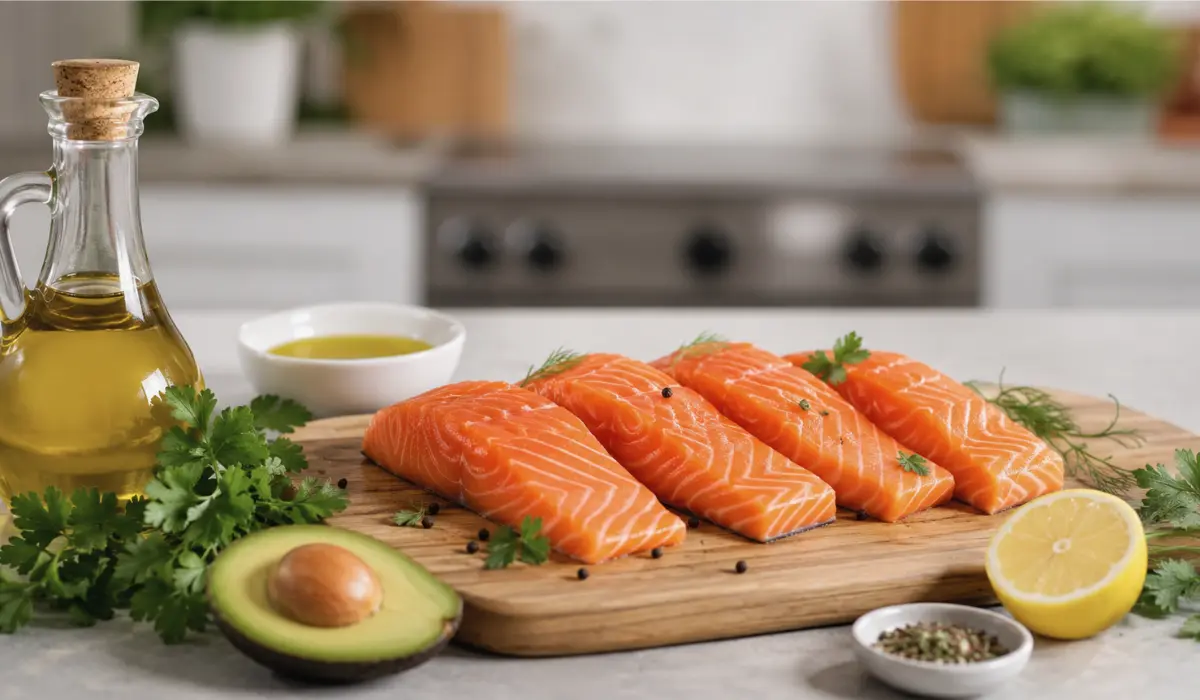
Salmon is a popular fatty fish known for its rich flavor, protein content, and natural omega-3 fats. It is often added to healthy meal plans because it supports balanced nutrition without heavy carbs or processed ingredients.
Many people choose salmon for heart-friendly eating, but they also want to understand how its natural cholesterol content fits into daily diet choices.
This article explains salmon’s nutrition profile, its effect on cholesterol concerns, and the best ways to eat it safely. It also covers portions, cooking methods, and practical tips for people trying to maintain a healthier diet.
Salmon Nutrition At A Glance
Salmon is a nutrient-dense fish, meaning it gives the body many useful nutrients in a reasonable portion. A typical cooked serving provides high-quality protein, healthy fat, vitamin B12, vitamin D, selenium, niacin, and omega-3 fats.
| Nutrient/Feature | Salmon Profile |
|---|---|
| Cholesterol | Moderate amount, not cholesterol-free |
| Fat type | Mostly unsaturated fat |
| Protein | High-quality complete protein |
| Omega-3 fats | Naturally rich source |
| Carbs | Naturally carb-free |
| Best cooking methods | Baked, grilled, steamed, roasted |
This balance matters because cholesterol health is not based on one nutrient alone. The full food pattern matters more, especially for people trying to maintain normal cholesterol levels. Salmon may be a better choice than fatty red meat because it offers healthy fats with less saturated fat in many preparations.
Why Salmon Can Support Heart Health?
Salmon is often linked with heart health because it contains omega-3 fatty acids. These fats are important because the body cannot make enough of them on its own, so they need to come from food.
Omega-3 fats may help support healthier triglyceride levels, blood vessel function, and inflammation balance. This does not mean salmon is a medicine or a cure for high cholesterol, but it can be part of a better diet pattern.
For cholesterol support, salmon works best when it replaces less heart-friendly foods. For example, choosing grilled salmon instead of processed meat, fried chicken, bacon, or fatty steak may lower saturated fat intake while keeping meals filling and protein-rich.
Salmon vs Red Meat For Cholesterol
Salmon and red meat can both contain cholesterol, but they are very different in fat quality. Many red meats are higher in saturated fat, especially fatty cuts, processed meats, sausages, bacon, and burgers.
Saturated fat can raise LDL cholesterol in many people. LDL is often called “bad cholesterol” because high levels may contribute to plaque buildup in the arteries over time. That is why food swaps can matter.
Replacing some red meat meals with salmon may support better cholesterol management. The benefit does not come from salmon being cholesterol-free. It comes from its healthier fat profile, omega-3 content, and ability to replace foods higher in saturated fat.
Best Ways To Eat Salmon For Cholesterol
The healthiest way to eat salmon for cholesterol is to prepare it simply. Baking, grilling, poaching, steaming, or air-frying with little oil can keep the meal lighter while preserving flavor and nutrients.
Use heart-friendly ingredients such as olive oil, lemon juice, garlic, herbs, pepper, vegetables, brown rice, quinoa, lentils, or salad. These pairings can make the whole meal better for cholesterol and overall heart health.
Try to limit butter-heavy sauces, cream-based toppings, deep-fried salmon, and very salty smoked salmon. These do not make salmon “bad,” but they can add saturated fat or sodium, which may be a concern for heart health.
How Much Salmon Should You Eat?
Many health organizations recommend eating fish regularly as part of a balanced diet. For many adults, two servings of fish per week is a common heart-friendly goal, especially fatty fish such as salmon, sardines, trout, and mackerel.
A serving is often around 3 ounces cooked, but needs can vary by age, appetite, health status, and overall diet. People who are pregnant, breastfeeding, or feeding children should follow fish safety guidance carefully.
Eating salmon every day is not necessary for most people. Variety is better. Rotate salmon with other healthy proteins such as beans, lentils, tofu, skinless poultry, eggs in moderation, low-fat yogurt, nuts, seeds, and other low-mercury fish.
Who Should Be Careful With Salmon?
Most people can enjoy salmon as part of a healthy diet, but some should be more careful. Anyone with a fish allergy should avoid salmon completely unless a doctor says otherwise.
People with high blood pressure may need to limit smoked salmon because it can be high in sodium. Those with kidney disease, special protein restrictions, or complex heart conditions should ask a healthcare professional about proper portions.
If you already have high cholesterol, salmon can still be a smart choice, but it should not replace medical care. Keep checking cholesterol levels, follow your doctor’s advice, stay active, eat more fiber, and limit saturated and trans fats.
FAQs
Yes, salmon can be good for high cholesterol when prepared in a heart-friendly way. Its unsaturated fats and omega-3s may support better heart health, especially when it replaces fatty red meat or fried foods.
Salmon is not likely to raise LDL cholesterol the same way high-saturated-fat foods can. However, results depend on portion size, cooking method, total diet, genetics, weight, activity, and existing health conditions.
Yes, grilled salmon is usually better for cholesterol than fried salmon. Frying can add extra calories, unhealthy fats, and sodium, while grilling keeps the meal lighter and preserves salmon’s natural nutrients.
Many people with heart disease can eat salmon, but personal advice matters. Choose baked or grilled salmon, avoid heavy sauces, and ask your doctor if you have fluid, sodium, or protein restrictions.
Canned salmon can be healthy for cholesterol if it is low in sodium and packed without heavy sauces. It still provides protein and omega-3 fats, making it a convenient heart-friendly option.
References
Mayo Clinic – Fish Oil and Omega-3 Fatty Acids
https://www.mayoclinic.org/drugs-supplements-fish-oil/art-20364810
American Heart Association – Fish and Omega-3 Fatty Acids
https://www.heart.org/en/healthy-living/healthy-eating/eat-smart/fats/fish-and-omega-3-fatty-acids
U.S. Food & Drug Administration – Advice About Eating Fish
https://www.fda.gov/food/consumers/advice-about-eating-fish