Hyperlipidemia and hypercholesterolemia can be confusing because both terms are linked to high fat levels in the blood. They are often used together, but they do not mean exactly the same thing.
Hyperlipidemia is the broader term. It means there are too many lipids, or fats, in the blood. These lipids may include cholesterol, triglycerides, or both. Hypercholesterolemia is more specific. It means cholesterol levels are too high, especially LDL cholesterol, often called “bad” cholesterol.
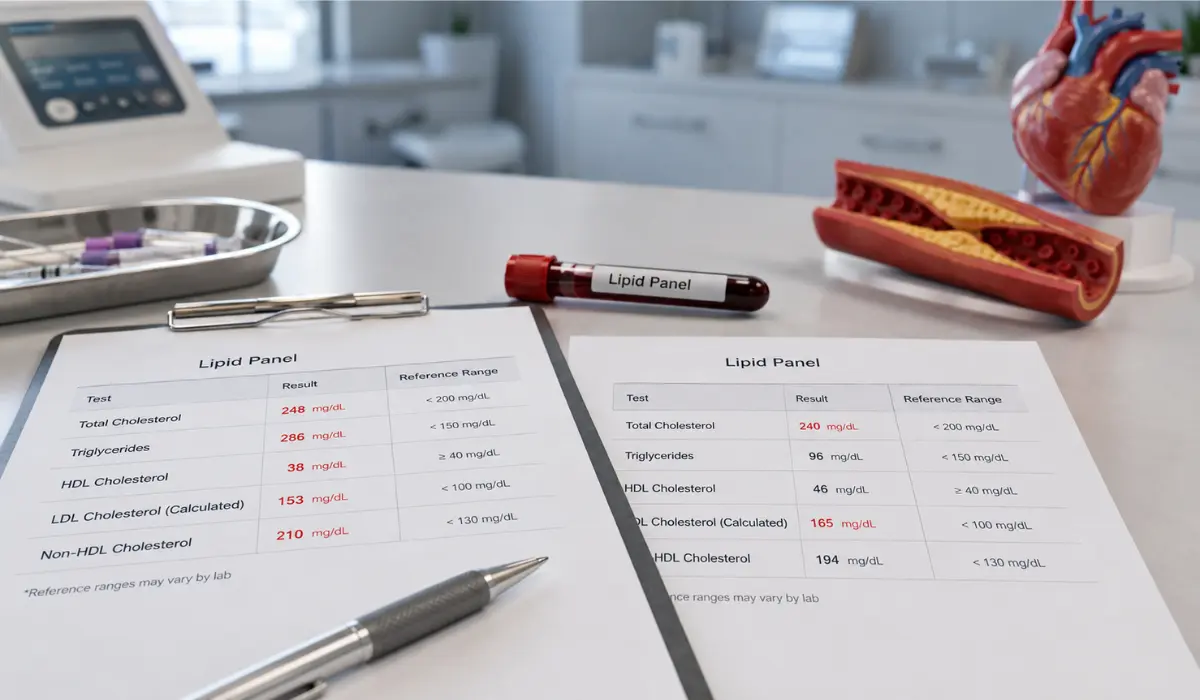
Understanding the difference matters because each condition may affect heart health in a different way. A lipid panel blood test helps identify which blood fats are high and what treatment may be needed.
What Is Hyperlipidemia?
Hyperlipidemia means the blood contains higher-than-normal levels of lipids. Lipids include cholesterol and triglycerides. Cholesterol is needed for cell structure, hormones, and digestion, while triglycerides store extra energy from food.
When lipid levels stay high for a long time, fatty deposits may build up inside the arteries. This can narrow blood vessels and increase the risk of heart disease, heart attack, and stroke. High LDL cholesterol is especially linked with plaque buildup in the arteries.
Hyperlipidemia may involve:
- High LDL cholesterol
- High triglycerides
- Low HDL cholesterol
- High non-HDL cholesterol
- A mix of abnormal lipid levels
This means a person can have hyperlipidemia even if their cholesterol is not the only problem. For example, someone may have normal LDL cholesterol but very high triglycerides.
What Is Hypercholesterolemia?
Hypercholesterolemia means high cholesterol in the blood. It is a type of hyperlipidemia, but it focuses mainly on cholesterol levels rather than all blood fats.
Cholesterol results usually include total cholesterol, LDL cholesterol, HDL cholesterol, and non-HDL cholesterol. LDL is considered the main cholesterol type linked to artery plaque, while HDL helps carry cholesterol back to the liver for removal.
For most adults, healthy cholesterol levels are generally listed as total cholesterol below 200 mg/dL, LDL below 100 mg/dL, non-HDL below 130 mg/dL, and HDL at 60 mg/dL or higher as best. A normal triglyceride level is below 150 mg/dL.
Hyperlipidemia vs Hypercholesterolemia: Main Difference
The main difference is scope. Hyperlipidemia is a broad condition involving high levels of one or more blood fats. Hypercholesterolemia is a narrower condition involving high cholesterol.
A simple way to understand it is this:
| Term | Meaning | What May Be High |
|---|---|---|
| Hyperlipidemia | High blood fats | Cholesterol, triglycerides, or both |
| Hypercholesterolemia | High blood cholesterol | Mainly total cholesterol or LDL cholesterol |
| Hypertriglyceridemia | High triglycerides | Triglycerides only |
So, all hypercholesterolemia is a form of hyperlipidemia, but not all hyperlipidemia is hypercholesterolemia.
Common Lipid Panel Numbers
A lipid panel is the main blood test used to check cholesterol and triglyceride levels. Results are usually measured in milligrams per deciliter, or mg/dL.
General adult reference numbers include:
| Lipid Marker | Healthy or Desirable Level |
| Total cholesterol | Less than 200 mg/dL |
| LDL cholesterol | Less than 100 mg/dL |
| Non-HDL cholesterol | Less than 130 mg/dL |
| HDL cholesterol | 60 mg/dL or higher is best |
| Triglycerides | Less than 150 mg/dL |
LDL levels of 130–159 mg/dL are often considered borderline high, 160–189 mg/dL high, and 190 mg/dL or higher very high.
Causes Of Hyperlipidemia And Hypercholesterolemia
The causes are often similar, but the pattern may differ from person to person.
Common causes include an unhealthy diet, lack of physical activity, smoking, excess alcohol use, obesity, diabetes, hypothyroidism, kidney disease, liver disease, and some medications. Family history can also play a major role.
The National Heart, Lung, and Blood Institute notes that lifestyle is a common cause of high LDL or low HDL, but inherited genes, other health conditions, and medicines can also affect cholesterol levels.
Familial hypercholesterolemia is one inherited condition that can cause very high LDL cholesterol from a young age. People with LDL cholesterol around 190 mg/dL or higher may need medical evaluation for inherited cholesterol problems, especially if there is a family history of early heart disease.
Symptoms: Can You Feel High Lipids?
Most people do not feel symptoms from hyperlipidemia or hypercholesterolemia. That is why these conditions are often found during routine blood tests.
In rare or severe cases, very high cholesterol may cause fatty deposits under the skin, yellowish bumps around the eyes, or a pale ring around the cornea. However, many people have no visible warning signs until complications develop.
Because of this, regular screening is important, especially for adults, people with diabetes, people with high blood pressure, smokers, and those with a family history of heart disease.
Health Risks
Both hyperlipidemia and hypercholesterolemia can increase cardiovascular risk, but the exact risk depends on which lipid levels are abnormal.
High LDL cholesterol can lead to plaque buildup inside artery walls. Over time, this may reduce blood flow and increase the risk of heart attack and stroke.
High triglycerides also matter. The American Heart Association explains that high triglycerides combined with high LDL or low HDL are linked with fatty buildups in artery walls, raising the risk of heart attack and stroke.
Risk is also affected by age, blood pressure, diabetes, smoking, weight, kidney health, family history, and existing heart disease.
Treatment And Management
Treatment depends on the lipid pattern and overall heart risk. Many people start with lifestyle changes, while others may also need medication.
Healthy steps may include:
Eating more vegetables, fruits, beans, oats, whole grains, nuts, and fish can support better lipid levels. Reducing saturated fat, trans fat, fried foods, processed meats, sugary drinks, and refined carbohydrates may also help.
Regular physical activity can raise HDL cholesterol and lower triglycerides. Weight management, quitting smoking, limiting alcohol, and controlling diabetes or thyroid disease are also important.
Doctors may prescribe statins, ezetimibe, PCSK9 inhibitors, fibrates, omega-3 prescription products, or other medications depending on the lipid problem and heart risk.
Conclusion
Hyperlipidemia and hypercholesterolemia are related, but they are not identical. Hyperlipidemia means high blood fats in general, including cholesterol and triglycerides. Hypercholesterolemia means high cholesterol specifically, usually involving high LDL cholesterol.
A lipid panel is the best way to know which condition is present. Since high cholesterol and high triglycerides often have no symptoms, regular testing and early management can help lower long-term heart and stroke risk.
FAQs
No. Hyperlipidemia is a broader term for high blood fats. Hypercholesterolemia specifically means high cholesterol, especially high LDL or total cholesterol.
Both can be serious. Risk depends on LDL, triglycerides, HDL, blood pressure, diabetes, smoking, family history, and existing heart disease.
Yes. A person may have normal cholesterol but high triglycerides. Since triglycerides are blood fats, this still counts as hyperlipidemia.
A lipid panel checks total cholesterol, LDL cholesterol, HDL cholesterol, non-HDL cholesterol, and triglycerides. It helps identify the exact lipid problem.
Yes. A heart-healthy diet, regular exercise, weight control, quitting smoking, and limiting alcohol can improve lipid levels. Some people also need medication.
References
1. National Heart, Lung, and Blood Institute
Blood Cholesterol Causes and Risk Factors
https://www.nhlbi.nih.gov/health/blood-cholesterol/causes
2. American Heart Association
HDL, LDL Cholesterol and Triglycerides
https://www.heart.org/en/health-topics/cholesterol/hdl-good-ldl-bad-cholesterol-and-triglycerides
3. CDC
LDL and HDL Cholesterol and Triglycerides
https://www.cdc.gov/cholesterol/about/ldl-and-hdl-cholesterol-and-triglycerides.html