
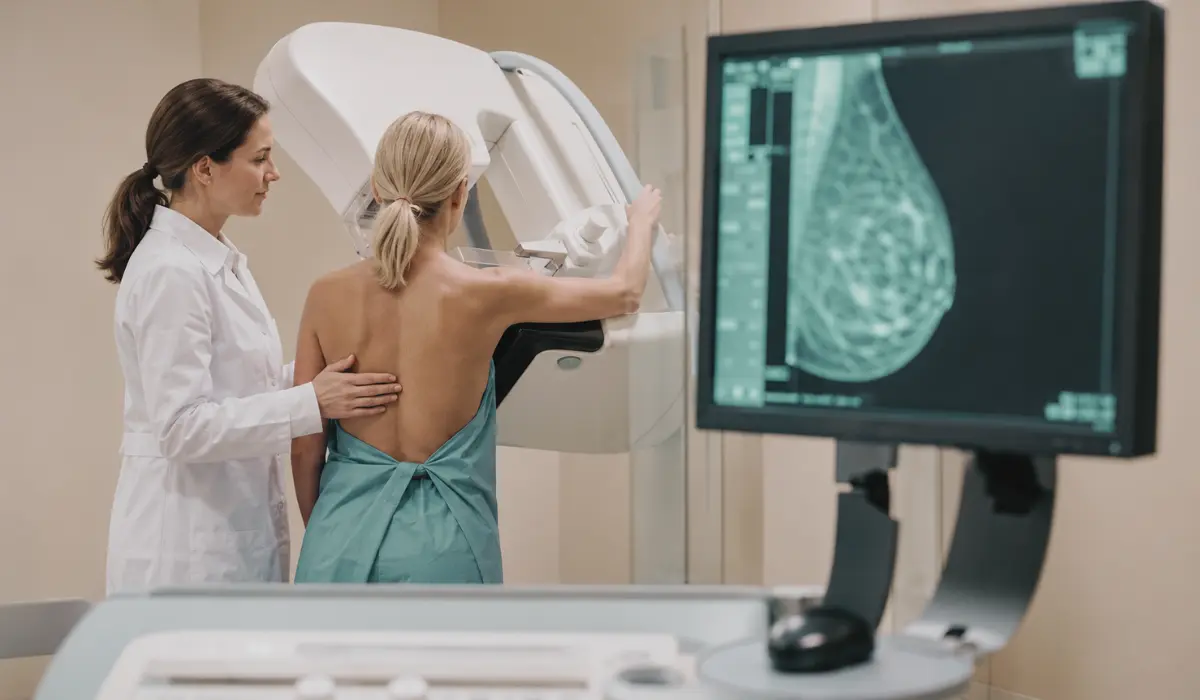
A diagnostic mammogram is a special breast imaging test used when a doctor needs a closer look at a specific breast concern. It may be recommended after a screening mammogram shows an unusual area, or when a person notices symptoms such as a lump, breast pain, nipple discharge, or skin changes.
Many people feel nervous when they hear they need this test, but it does not always mean cancer is present. In many cases, a diagnostic mammogram helps doctors clearly understand whether a breast change is harmless, needs follow-up, or requires more testing.
Why Doctors Recommend A Diagnostic Mammogram?
Doctors may recommend a diagnostic mammogram when there is a visible or felt breast concern that needs more detailed imaging. This can include a lump, thickened area, swelling, nipple changes, breast pain in one spot, or unusual fluid from the nipple.
It is also commonly used after a regular screening mammogram shows something that needs another look. The goal is to study the area more carefully, compare it with past images if available, and decide whether the finding is normal, benign, or suspicious.
Diagnostic Mammogram Vs Regular Screening Mammogram
A screening mammogram is usually done for people who do not have breast symptoms. It is used as a routine check to look for early breast changes before they can be felt or noticed. It normally takes standard images of both breasts.
A diagnostic mammogram is more focused. It takes extra images from different angles and may zoom in on a certain area. The imaging team may spend more time checking one breast or one spot so the radiologist can study the concern in greater detail.
When You May Need This Breast Imaging Test?
You may need this test if your doctor feels a breast lump during an exam or if you notice a change at home. Changes like dimpling skin, nipple pulling inward, redness, swelling, or ongoing breast pain should be checked by a medical professional.
A diagnostic mammogram may also be advised if your screening mammogram was unclear. Sometimes breast tissue overlaps in a way that creates a shadow, or dense breast tissue makes the image harder to read. Extra images can help clear up the concern.
What Happens During The Appointment?
During the test, a trained technologist will position your breast on the mammogram machine. The breast is gently compressed between two plates for a few seconds while images are taken. Compression can feel uncomfortable, but it helps create clearer pictures.
The technologist may take several images from different angles. If the radiologist needs more detail, additional views may be taken during the same visit. In some cases, a breast ultrasound may also be done to better check a lump or specific area.
How To Prepare Before The Test?
On the day of your appointment, avoid using deodorant, lotion, powder, perfume, or cream around your chest or underarms. Some products can show up on mammogram images and make the results harder to read.
Wear a two-piece outfit if possible, because you will only need to remove clothing from the waist up. Bring previous mammogram reports or images if they were done at another facility, as comparison with old results can be very helpful.
Is A Diagnostic Mammogram Painful?
A diagnostic mammogram may cause pressure or mild discomfort because the breast needs to be compressed. The pressure usually lasts only a few seconds for each image. Some people feel more discomfort if their breasts are tender.
If you are worried about pain, tell the technologist before the test starts. They can guide you through the process and help position you as comfortably as possible. Try to stay relaxed, because muscle tension can make the test feel more uncomfortable.
What The Results May Show?
The results may show that the area is normal breast tissue, a cyst, a benign growth, calcium deposits, dense tissue, or another non-cancerous change. Many breast findings are not cancer, but they still need careful review.
If the image shows something suspicious, your doctor may recommend more testing. This may include ultrasound, MRI, short-term follow-up imaging, or a biopsy. A biopsy is the only way to confirm whether a suspicious area is cancer.
What Happens After The Test?
In many imaging centers, the radiologist may review the images soon after the test. Sometimes you may receive results the same day, while other places may send the report to your doctor within a few days.
Your doctor will explain what the results mean and whether you need any next steps. If the result is normal or benign, you may return to routine screening. If follow-up is needed, your care team will guide you through the next appointment.
Benefits Of Getting Clear Breast Answers
The biggest benefit of a diagnostic mammogram is that it gives doctors a clearer view of a breast concern. Instead of guessing, they can study the exact area and decide if it needs monitoring, treatment, or more testing.
It can also bring peace of mind. Waiting and worrying about a breast change can be stressful. A diagnostic mammogram helps move the process forward so you and your doctor can make informed decisions with more confidence.
Important Safety Points To Know
Mammograms use a low dose of radiation. For most people, the benefit of finding breast problems early is greater than the small radiation exposure. Still, you should tell the imaging center if you are pregnant or think you may be pregnant.
Also tell your doctor about breast implants, past breast surgery, previous biopsies, family history of breast cancer, or any current symptoms. These details help the radiologist understand your images more accurately and choose the right follow-up if needed.
When To Call Your Doctor?
Call your doctor if you notice a new lump, nipple discharge, breast swelling, skin dimpling, redness, thickening, or a change in breast shape. Even if you recently had a normal mammogram, new symptoms should not be ignored.
You should also contact your doctor if you do not receive your results within the expected time. Clear communication is important, especially when a test was ordered because of a specific symptom or an abnormal screening result.
Conclusion
A diagnostic mammogram is a detailed breast imaging test used to check a specific concern more closely. It may be done after an abnormal screening mammogram or when symptoms like a lump, pain, nipple discharge, or skin changes appear.
Although needing this test can feel stressful, it is an important step toward clear answers. Many findings are not cancer, but proper imaging helps doctors decide what is normal, what needs follow-up, and what may need further testing.
FAQs
No. A diagnostic mammogram does not automatically mean cancer. It simply means your doctor or radiologist needs a closer look at a breast concern.
A regular mammogram is routine screening for people without symptoms. A diagnostic mammogram gives a closer look when symptoms or unclear results appear.
A diagnostic mammogram can feel worrying, but it does not always mean cancer. Doctors often use it to check an area more carefully.
Only a small percentage of diagnostic mammograms lead to a cancer diagnosis. Most results show normal tissue, cysts, or other benign breast changes.
Many imaging centers provide same-day results because the radiologist reviews the images quickly. In some cases, results may take a few days.