
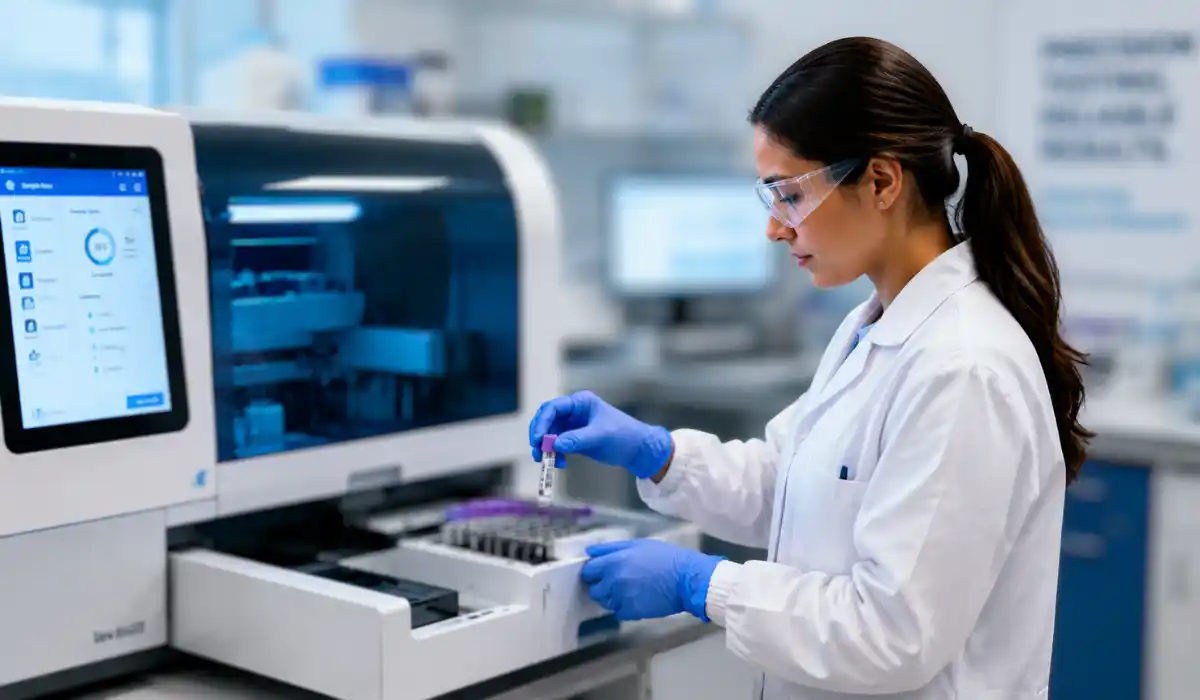
The U.S. central laboratory market is rapidly evolving, driven by the growing demand for precision medicine and the increasing complexity of clinical trials.
In 2025, the market was valued at approximately USD 2.37 billion and is projected to reach around USD 5.19 billion by 2035, expanding at a compound annual growth rate (CAGR) of 8.08%.
This growth reflects the critical role central laboratories play in delivering accurate testing, standardized sample analysis, and regulatory-compliant data for drug development and clinical research.
Central labs provide a standardized testing environment for clinical trial samples collected across multiple sites. Their ability to deliver reliable and consistent data ensures that researchers and pharmaceutical companies can evaluate drugs and treatments accurately, while meeting regulatory requirements.
Increasingly, trials involve multiple sites, advanced diagnostics, and personalized therapy protocols, further strengthening the need for centralized lab services.
Rising Demand For Centralized Testing
Centralized laboratory testing is becoming essential as clinical trials grow more complex. A U.S. central lab allows consistent, high-quality analysis across multiple study sites, which is particularly important for trials that involve diverse populations or multi-site data collection.
Pharmaceutical and biotechnology companies are increasingly outsourcing trial testing to specialized labs to ensure uniformity and compliance with regulatory guidelines.
Moreover, the adoption of advanced diagnostic technologies, biomarker testing, and genomic analysis is fueling growth, particularly in oncology and rare disease research. Central labs also streamline logistics, sample storage, and reporting, enhancing trial efficiency and speed.
Key Growth Drivers
Several factors contribute to the expansion of the U.S. central lab market:
- Precision Medicine: Personalized therapies require highly accurate lab testing, including genetic profiling and biomarker analysis.
- Multi-Site Clinical Trials: Large-scale phase III trials demand standardized testing across locations, ensuring consistent data quality.
- Regulatory Compliance: Stringent FDA and NIH guidelines create a need for centralized labs that can maintain robust quality control.
- Advanced Technology Integration: Automation, digital reporting, and real-time sample tracking improve operational efficiency.
- Focus on Oncology and Rare Diseases: Increased investment in cancer research and rare disease drug development drives demand for specialized lab services.
Recent initiatives by major players reflect these trends. For example, Labcorp expanded its biomarker testing portfolio in 2025 to support oncology and neurodegenerative disease research.
Similarly, Quest Diagnostics enhanced its laboratory network with automation and digital integration to manage large-scale clinical trials more effectively.
Market Segmentation
The U.S. central lab market can be segmented across several categories:
By Service Type:
- Biomarker Testing Services (Genomic, Proteomic, Metabolomic)
- Sample Management & Logistics (Collection Kits, Biorespositories, Cold Chain)
- Clinical Trials Laboratory Services (Safety and Specialized Testing)
- Data Management & Reporting (Digital Platforms, Real-Time Analytics)
- Anatomic Pathology & Histology
By Therapeutic Area:
- Oncology (Solid Tumors, Hematologic Malignancies)
- Infectious Diseases (Viral, Bacterial)
- Neurology and CNS Disorders
- Cardiology and Cardiometabolic Diseases
- Immunology and Autoimmune Disorders
- Rare and Endocrine Disorders
By Clinical Trial Phase:
- Phase I, II, III, and IV
By End Users:
- Pharmaceutical Companies
- Biotechnology Firms
- Academic & Research Institutes
- Contract Research Organizations (CROs)
- Medical Device Companies
By Test Type:
- Genetic Testing, PCR, NGS, Microarray
- Microbiology, Virology, Mycology
- Hematology, Immunology, Clinical Chemistry
By Technology:
- Molecular Diagnostics, Immunoassays, Flow Cytometry
- Chromatography, Digital Pathology, Next-Generation Sequencing
Leading Segments And Applications
Biomarker testing dominated the market with a 31% share in 2025, and it is expected to grow at the fastest CAGR of 9.8% due to its critical role in targeted therapies and patient-specific drug development.
Oncology accounted for the largest therapeutic segment, representing 38% of demand, as cancer research relies heavily on genetic profiling and biomarker analysis to guide precision medicine approaches.
Phase III trials represent the highest utilization of central lab services, with a 45% share in 2025, because late-stage studies involve large populations and require strict regulatory compliance.
Pharmaceutical companies remain the largest end users, reflecting their reliance on centralized lab services for data accuracy, biomarker testing, and trial standardization.
Genetic testing and molecular diagnostics are expected to grow rapidly due to falling sequencing costs, rising cancer incidence, and the expansion of personalized medicine.
Top Players
Key players driving growth in the U.S. central lab market include Labcorp, Quest Diagnostics, IQVIA, Thermo Fisher Scientific, and Medpace. These companies are investing in advanced lab automation, integrated data management, and precision medicine capabilities to meet the evolving demands of clinical research. Their efforts in expanding biomarker and genetic testing, as well as enhancing multi-site trial management, continue to solidify their leadership positions.
Conclusion
The U.S. central lab market is on a strong growth trajectory, fueled by the increasing complexity of clinical trials, the rise of precision medicine, and the adoption of advanced diagnostic technologies.
Central labs provide a critical backbone for consistent, regulatory-compliant testing, ensuring accurate and reliable data for pharmaceutical development.
As personalized therapies, oncology research, and genetic testing continue to expand, centralized laboratory services will remain essential to the efficiency and quality of clinical research.
With ongoing investments from leading players and technological innovations, the market is expected to continue its rapid expansion through 2035.