
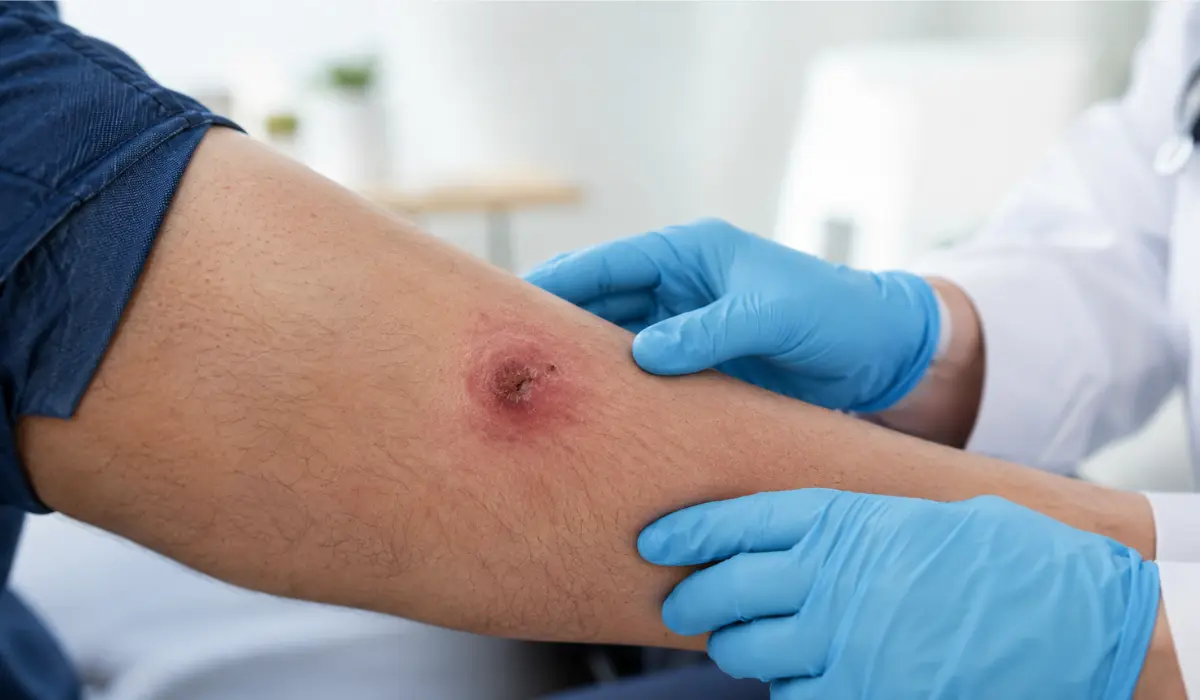
A MRSA skin infection happens when a type of staph bacteria enters the skin and causes an infection. MRSA stands for methicillin-resistant Staphylococcus aureus. This means the bacteria resist some common antibiotics, so doctors need to choose treatment carefully.
MRSA often starts as a small skin bump, sore, boil, or painful red area. Many people mistake it for a pimple, insect bite, or spider bite at first. However, the infection can worsen if bacteria spread deeper into the skin or enter the bloodstream.
What Does A MRSA Skin Infection Look Like?
A MRSA skin infection often appears as a swollen, painful bump on the skin. The area can look red, warm, tender, or filled with pus. Some bumps may drain thick fluid or turn into deeper boils or abscesses. Mayo Clinic notes that early staph skin infections, including MRSA, can look like pimples or spider bites.
The infected area may grow quickly. It can also feel painful when touched. In some cases, a person may develop fever, chills, tiredness, or a general feeling of illness. These symptoms can suggest that the infection needs medical attention.
MRSA can appear on any part of the body, but it often affects areas with cuts, scrapes, shaving irritation, or skin friction.
Common Symptoms Of MRSA Skin Infection
MRSA skin infection symptoms can vary from mild to serious. Some people notice only a small sore, while others develop a painful abscess that needs medical care.
Common symptoms include:
- Red, swollen, or painful skin
- A bump that looks like a pimple or boil
- Warm skin around the infected area
- Pus, drainage, or crusting
- A sore that does not heal
- Fever or chills
- Increasing pain or swelling
The CDC advises people to contact a healthcare provider if MRSA symptoms include fever or do not improve within 48 hours. The CDC also advises not to pick, squeeze, or pop the sore.
What Causes MRSA Skin Infection?
MRSA spreads when the bacteria enter the body through broken skin. Even a small cut, scrape, rash, or irritated hair follicle can give bacteria a path into the skin.
MRSA can spread through direct skin contact with an infected person. It can also spread through shared personal items, such as towels, razors, clothes, sports gear, or wound bandages.
People have a higher risk when they spend time in close-contact places. This includes gyms, locker rooms, schools, military settings, childcare centers, and sports environments.
Hospitals and care homes also carry higher risk, especially for people with wounds, surgery sites, medical devices, or weak immune systems. NHS notes that people staying in hospitals and care homes have a higher risk of MRSA infection.
Who Is More At Risk?
Anyone can get a MRSA skin infection, but some people face a higher chance of exposure or complications.
Risk factors include:
- Cuts, scrapes, or open wounds
- Poor wound care
- Close skin-to-skin contact
- Sharing towels, razors, or clothing
- Playing contact sports
- Recent hospital stay or surgery
- Living in a crowded setting
- Weak immune system
- Use of medical tubes, catheters, or implants
People with diabetes, chronic illness, or slow-healing wounds should take skin infections seriously. They should contact a healthcare provider early if redness, swelling, pain, or drainage appears.
How Is MRSA Skin Infection Diagnosed?
A healthcare provider usually checks the infected area first. They may ask when symptoms started, whether the area has grown, and whether fever or drainage is present.
In some cases, the provider may take a sample of pus or fluid from the wound. A lab test can confirm whether MRSA caused the infection. It can also help doctors choose an antibiotic that works against the bacteria.
Testing matters because MRSA resists some common antibiotics. Doctors should not guess treatment when an infection looks severe, spreads quickly, or does not improve.
MRSA Skin Infection Treatment
Treatment depends on the size, depth, and severity of the infection. Small infections may need careful cleaning, covering, and medical monitoring. Larger boils or abscesses may need drainage by a healthcare professional.
The CDC states that incision and drainage is the main treatment for MRSA skin infections, while antibiotics may also be required. Culture and susceptibility testing can guide antibiotic choices in severe infections or infections that do not respond to initial treatment.
Doctors may prescribe antibiotics that work against MRSA. These medicines can come as creams, pills, or IV treatment, depending on the case. Mayo Clinic advises patients to take oral antibiotics exactly as directed and finish the full prescribed course.
A person should never try to drain a boil at home. Squeezing or cutting the sore can push bacteria deeper into the skin and increase the risk of spread.
When Should You See A Doctor?
You should contact a healthcare provider if the sore becomes more painful, swollen, warm, or full of pus. You should also seek care if the infection spreads, fever appears, or the sore does not improve within 48 hours.
Get urgent medical help if you notice:
- Fast-spreading redness
- High fever
- Severe pain
- Red streaks from the wound
- Dizziness or confusion
- Shortness of breath
- Infection near the eyes, face, or surgical wound
MRSA can sometimes spread beyond the skin. MedlinePlus notes that severe MRSA infections may affect the bloodstream, lungs, heart, urine, organs, or surgical areas.
How To Care For A MRSA Skin Infection At Home?
Home care should support medical treatment, not replace it. Keep the infected area clean, dry, and covered with a fresh bandage. Wash your hands before and after touching the wound or changing a dressing.
Do not share towels, razors, clothes, bedding, or personal items. Wash used towels, sheets, and clothing properly. Clean surfaces that come into contact with drainage or bandages.
The CDC recommends covering the affected area with clean, dry bandages until a healthcare provider checks it. It also recommends frequent hand cleaning and avoiding picking or popping the sore.
How To Prevent MRSA Skin Infection?
Good hygiene can lower the risk of MRSA spread. Wash your hands often with soap and water. Use hand sanitizer when soap is not available.
Keep cuts, scrapes, and wounds clean and covered until they heal. Avoid touching other people’s wounds or bandages. Do not share towels, razors, washcloths, uniforms, or personal care items.
Good hygiene, covered wounds, avoiding contact with other people’s wounds, avoiding shared personal items, and washing soiled sheets, towels, and clothes properly can help prevent community-associated MRSA.
People who use gyms should wipe equipment before and after use. They should shower after workouts and avoid placing bare skin on shared benches, mats, or locker room surfaces.
Can MRSA Skin Infection Come Back?
Yes, MRSA skin infection can come back in some people. Recurring MRSA may happen when bacteria remain on the skin, in the nose, or on shared household items. It can also return when wounds do not heal fully or when close contacts spread the bacteria back and forth.
A doctor may suggest extra steps for people with repeated MRSA infections. These steps may include special skin washes, nasal ointments, household cleaning changes, or testing close contacts in certain cases.
Do not start decolonization products without medical advice. A healthcare provider should decide whether these steps fit your situation.
Final Thoughts
A MRSA skin infection can start like a small bump, but it should not be ignored. Pain, swelling, warmth, pus, fever, or fast-spreading redness needs medical attention. Early care helps reduce the risk of complications.
Keep the area covered, wash your hands often, avoid sharing personal items, and do not squeeze or drain the sore at home. With proper treatment and prevention, many MRSA skin infections can heal safely.
FAQs
Yes, MRSA can spread through skin contact, wound drainage, shared towels, razors, clothing, or contaminated surfaces. Cover wounds and wash hands often to reduce spread.
Some mild skin infections may improve, but MRSA should be checked if pain, swelling, pus, fever, or worsening redness appears. Delayed care can cause complications.
Treatment depends on severity. A doctor may drain an abscess and prescribe antibiotics that work against MRSA. Never drain the infection at home.
Healing time depends on the infection size, treatment, and overall health. Many skin infections improve within days after proper care, but deeper infections take longer.
You may need to avoid work if the wound drains, cannot stay covered, or your job involves close contact. Ask your healthcare provider for guidance.
References
Centers for Disease Control and Prevention
Methicillin-resistant Staphylococcus aureus (MRSA) Basics
https://www.cdc.gov/mrsa/about/index.html
Mayo Clinic
MRSA Infection: Symptoms & Causes
https://www.mayoclinic.org/diseases-conditions/mrsa/symptoms-causes/syc-20375336
NHS
MRSA
https://www.nhs.uk/conditions/mrsa/
Recent Post