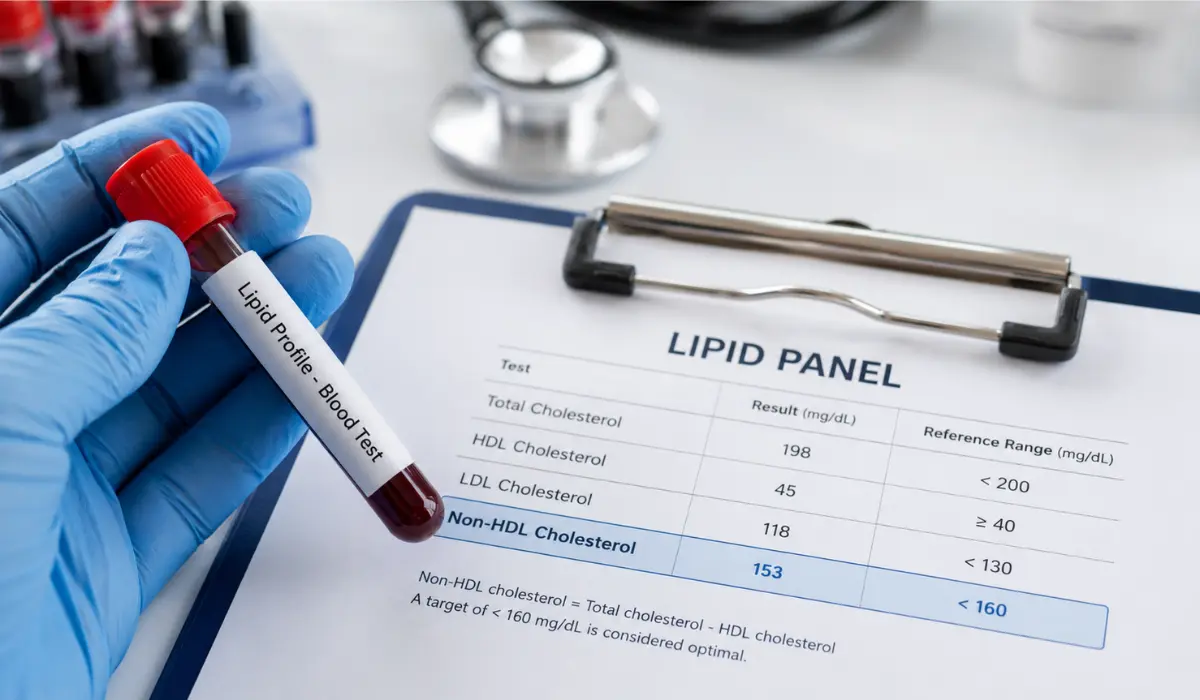
Non-HDL cholesterol in a blood test means the amount of cholesterol in your blood that is not carried by HDL, the “good” cholesterol. It includes LDL cholesterol and other harmful cholesterol particles that may raise the risk of plaque buildup in the arteries.
In simple terms, non-HDL cholesterol helps show the total amount of “bad” cholesterol in the blood. It is often considered useful because it gives a broader view of heart risk than LDL cholesterol alone.
Formula:
Total Cholesterol – HDL Cholesterol = Non-HDL Cholesterol
For example, if your total cholesterol is 200 mg/dL and your HDL is 50 mg/dL, your non-HDL cholesterol is 150 mg/dL.
For most adults, a non-HDL cholesterol level below 130 mg/dL is generally considered healthy. However, people with diabetes, heart disease, previous heart attack, stroke risk, or other risk factors may need a lower target.
Why Is Non-HDL Cholesterol Important?
Non-HDL cholesterol matters because it includes several cholesterol particles that can contribute to artery plaque. These include LDL, VLDL, IDL, and other cholesterol-rich particles.
When these particles stay high for a long time, they may build up inside blood vessels. As a result, the arteries can become narrow and stiff. This may increase the risk of heart disease, chest pain, heart attack, and stroke.
Non-HDL cholesterol may be especially helpful when triglycerides are high, or when a person has obesity, metabolic syndrome, or type 2 diabetes. In these cases, LDL alone may not show the full picture of cholesterol-related risk.
Non-HDL Cholesterol Normal Range
| Group | Healthy Non-HDL Cholesterol Level |
|---|---|
| Adults age 20 or older | Less than 130 mg/dL |
| Children and teens | Less than 120 mg/dL |
| Higher-risk adults | Often lower than 130 mg/dL, based on doctor’s advice |
For most adults, non-HDL cholesterol below 130 mg/dL is a common goal. However, if a doctor sets an LDL goal below 70 mg/dL, the non-HDL goal may be below 100 mg/dL.
Non-HDL Cholesterol vs LDL Cholesterol
LDL cholesterol is often called “bad” cholesterol because high LDL can contribute to plaque buildup in the arteries. However, non-HDL cholesterol includes LDL plus other harmful cholesterol particles.
| Test Result | What It Shows |
| LDL cholesterol | Mainly one type of bad cholesterol |
| HDL cholesterol | Good cholesterol that helps carry cholesterol away |
| Total cholesterol | Overall cholesterol amount in blood |
| Non-HDL cholesterol | Total bad cholesterol particles |
| Triglycerides | Blood fats linked with heart risk when high |
Because non-HDL cholesterol includes more harmful particles than LDL alone, many healthcare professionals consider it a useful marker for heart disease risk.
What Causes High Non-HDL Cholesterol?
High non-HDL cholesterol can happen for several reasons. Common causes include a diet high in saturated fat, trans fat, and added sugar. Lack of physical activity, tobacco use, obesity, and genetics can also raise cholesterol levels.
Some people inherit cholesterol problems from their family. Therefore, even a healthy person may have high cholesterol because of genetic conditions such as familial hypercholesterolemia.
Symptoms Of High Non-HDL Cholesterol
High non-HDL cholesterol usually does not cause clear symptoms. Many people find out only after a blood test.
However, the problem is that high cholesterol may slowly damage arteries over time. Therefore, regular cholesterol testing is important, especially for adults, people with diabetes, smokers, people with obesity, and those with a family history of early heart disease.
Do You Need To Fast For A Non-HDL Cholesterol Test?
A standard lipid panel can show total cholesterol, LDL, HDL, triglycerides, and non-HDL cholesterol. Some people may need to fast for 9 to 12 hours before a cholesterol test, but this depends on the doctor’s instructions.
Non-HDL cholesterol is often less affected by recent food intake than calculated LDL cholesterol. However, it is still best to follow the lab or doctor’s instructions before testing.
How To Lower Non-HDL Cholesterol Naturally?
Lifestyle changes may help lower non-HDL cholesterol and improve heart health.
First, reduce saturated fat from fatty meats, butter, full-fat dairy, fried foods, and processed snacks. Also, limit trans fats and added sugars.
In addition, choose more heart-friendly foods such as vegetables, fruits, whole grains, beans, nuts, seeds, fish, and healthy oils. Regular physical activity can also help lower LDL cholesterol and raise HDL cholesterol.
Quitting smoking is also important because tobacco use can worsen cholesterol and increase heart and blood vessel risk. Finally, weight management may help improve cholesterol numbers, especially in people with overweight or obesity.
When Is Medicine Needed?
Some people need cholesterol-lowering medicine, especially if lifestyle changes are not enough. Doctors may recommend statins or other medicines depending on LDL, non-HDL cholesterol, triglycerides, age, diabetes, blood pressure, smoking history, and past heart problems.
The American Heart Association notes that cholesterol goals can vary. Some people may need LDL below 100 mg/dL, while higher-risk people may need lower goals such as 70 mg/dL or 55 mg/dL. Non-HDL targets are often set according to overall risk.
When Should You Talk To A Doctor?
Talk to a doctor if your non-HDL cholesterol is above the healthy range, your triglycerides are high, or you have risk factors such as diabetes, high blood pressure, smoking, obesity, kidney disease, or family history of early heart disease.
You should also ask your doctor what your personal cholesterol goal should be. A “normal” number for one person may not be ideal for another person with higher heart risk.
FAQs
Non-HDL cholesterol means total cholesterol minus HDL cholesterol. It shows the amount of cholesterol carried by harmful particles that may increase heart disease risk.
Non-HDL cholesterol can be more useful in some people because it includes LDL and other harmful particles, especially when triglycerides are high.
For most adults, a non-HDL cholesterol level below 130 mg/dL is generally considered healthy. Higher-risk people may need a lower target.
Subtract HDL cholesterol from total cholesterol. For example, total cholesterol 190 mg/dL minus HDL 50 mg/dL equals non-HDL 140 mg/dL.
Yes. Diet changes, regular exercise, weight management, quitting tobacco, and prescribed medicines can help lower non-HDL cholesterol and reduce heart risk.
References
1. American Heart Association
What Your Cholesterol Levels Mean
https://www.heart.org/en/health-topics/cholesterol/about-cholesterol/what-your-cholesterol-levels-mean
2. NHLBI, NIH
Blood Cholesterol – Diagnosis
https://www.nhlbi.nih.gov/health/blood-cholesterol/diagnosis
3. CDC
LDL and HDL Cholesterol and Triglycerides
https://www.cdc.gov/cholesterol/about/ldl-and-hdl-cholesterol-and-triglycerides.html
4. Cleveland Clinic
Non-HDL Cholesterol: What It Is & Normal Range
https://my.clevelandclinic.org/health/articles/non-hdl-cholesterol