
Magnetic Resonance Imaging (MRI) is one of the most powerful tools available in modern medicine, allowing doctors to visualize the body’s internal structures with remarkable clarity.
By combining strong magnetic fields with radio waves, MRI creates detailed images of organs, tissues, joints, and bones. These images are essential for diagnosing a wide variety of conditions, from neurological disorders and spinal injuries to musculoskeletal issues and certain cancers.
However, not all MRI machines are the same. The two main types open MRI and closed MRI offer different experiences and advantages for patients. Understanding the differences can help you make an informed choice based on comfort, diagnostic needs, and personal circumstances.
What Is A Closed MRI?
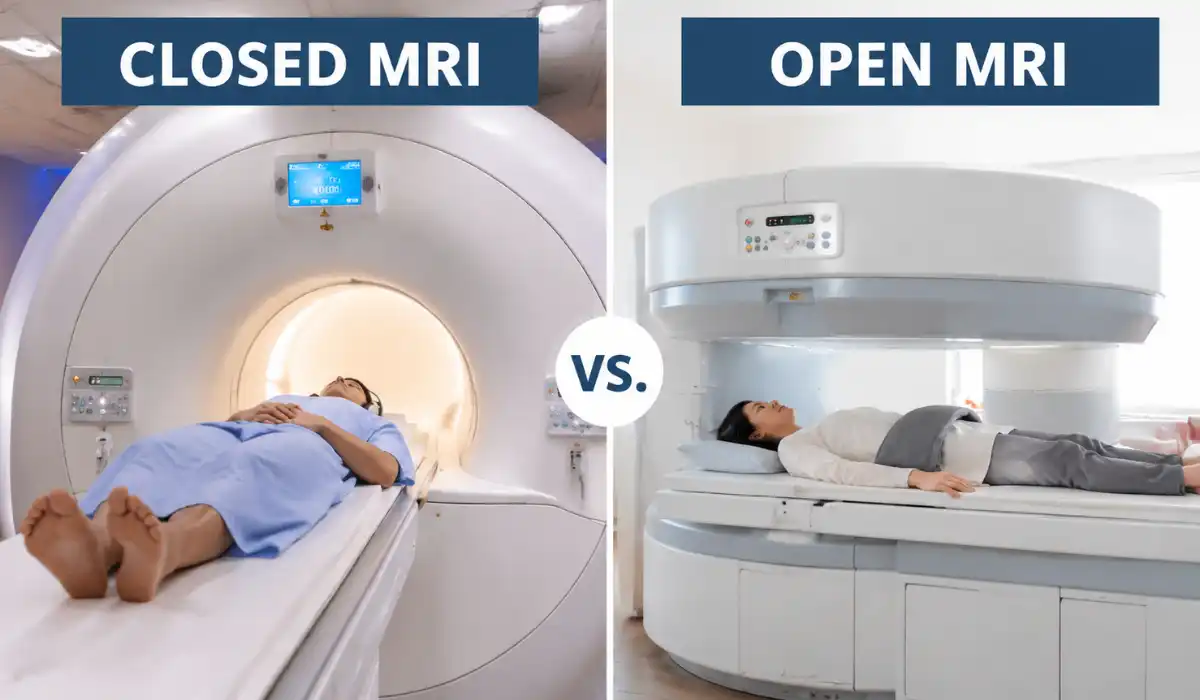
A closed MRI is the traditional, more common type of scanner. It features a cylindrical, tube-like structure that fully encloses the patient during the scan. Inside this tunnel, powerful magnets create high-resolution images that allow radiologists to detect even subtle abnormalities.
Advantages Of Closed MRI
- High-Resolution Imaging: The strong magnetic field produces detailed, precise images, ideal for diagnosing complex conditions.
- Fast Scan Times: For many body parts, closed MRIs can complete scans relatively quickly.
- Versatility: They are suitable for a wide range of medical applications, including brain imaging, spinal evaluations, and full-body scans.
Limitations
Despite these advantages, closed MRIs can present challenges:
- Claustrophobia: Being enclosed in a narrow tube can trigger anxiety in some patients.
- Size Restrictions: Patients who are overweight may feel uncomfortable or may not fit at all in the scanner.
- Noise: The scanner produces loud knocking and buzzing sounds, which may cause discomfort.
- Stillness Required: Patients must remain completely still, which can be difficult for children or those with anxiety.
What Is An Open MRI?
Open MRI machines were developed to address the comfort issues associated with closed MRIs. Unlike the enclosed design of traditional scanners, open MRIs feature an open or partially open structure, often leaving the sides or top exposed. This design makes the experience less intimidating for claustrophobic or larger patients.
Advantages Of Open MRI
- Greater Comfort: Patients have more room, which reduces anxiety and fear of confinement.
- Accessibility for Children and Larger Patients: The open MRI can comfortably accommodate pediatric patients and individuals with larger body types who may feel restricted in a closed MRI.
- Reduced Noise: Open MRIs are generally quieter than closed scanners.
- Companion Access: Some open MRI systems allow a family member or caregiver to stay nearby for reassurance.
- Weight-Bearing and Tilt Options: Certain models allow for scans while standing or in specific positions, which can help diagnose musculoskeletal or spinal issues more effectively.
Limitations
- Lower Resolution: Open MRIs often have weaker magnets, producing images with slightly lower resolution compared to closed MRIs.
- Longer Scans: Scan times may be longer due to the lower magnetic strength.
- Limited for Complex Cases: For highly detailed scans, such as certain brain or vascular studies, closed MRIs may still be preferred.
Comparing Open vs Closed MRI
When deciding between an open or closed MRI, it’s important to consider both comfort and diagnostic needs. Closed MRIs remain the gold standard for high-resolution imaging, especially when subtle abnormalities must be identified. Open MRIs, on the other hand, are designed to make the experience easier for patients who are anxious, claustrophobic, or physically larger.
Image Quality And Diagnostic Accuracy
Advancements in open MRI technology have significantly improved image quality over the years. For many routine scans, open MRI provides images that are nearly as clear as those from closed systems. However, for highly specialized scans requiring maximum detail, the closed MRI’s stronger magnets often provide an advantage.
Patient Experience
Comfort is the primary differentiator between the two types. Open MRI systems reduce anxiety and allow for a more relaxed scanning environment. Patients can move more freely, bring companions for support, and tolerate longer scans with less stress. This is particularly beneficial for children, seniors, or anyone with claustrophobia.
Cost And Accessibility
Open MRI machines often require less specialized maintenance and can be more cost-effective for clinics to operate. Closed MRI scanners, due to their stronger magnets and advanced technology, may come with higher operational costs. The choice may also depend on what’s available in your area and whether specialized imaging centers offer open MRI options.
Tips For A Comfortable MRI Experience
Regardless of which type of MRI Scan you choose, there are several ways to reduce anxiety and make the scan more tolerable:
- Request earplugs or headphones to reduce noise.
- Wear comfortable clothing without metal zippers or buttons.
- Discuss anti-anxiety medication options with your doctor if needed.
- Ask for a support person to be present if allowed.
- Use deep-breathing or relaxation techniques to remain calm.
Conclusion
Both open and closed MRI machines provide valuable diagnostic capabilities, but they cater to different patient needs. Closed MRI excels in image resolution and speed, making it ideal for complex cases.
Open MRI prioritizes comfort and accessibility, helping claustrophobic or larger patients undergo essential imaging with less stress. By understanding the strengths and limitations of each system, patients can make informed decisions and ensure they receive accurate, effective diagnostic care in a way that suits their comfort level.
Choosing the right MRI system is not just about technology it’s also about patient experience. Open MRI offers a patient-friendly alternative without significantly compromising accuracy, while closed MRI remains the benchmark for high-resolution, detailed scans.
Discussing your options with your healthcare provider can help determine which type is best suited for your medical needs.
Frequently Asked Questions
Closed MRI scanners fully enclose the patient in a tube for high-resolution imaging, while open MRI scanners have an open or partially open design to reduce claustrophobia and accommodate larger patients.
For most routine scans like joints, spine, or abdomen, open MRIs provide reliable imaging. However, closed MRIs offer higher-resolution scans for complex cases like brain or vascular imaging.
Open MRI is typically preferred for patients with claustrophobia, as the open design reduces anxiety and allows for a more comfortable scanning experience.
Yes, open MRIs are more accommodating for children and patients with larger body sizes, providing easier positioning and less stress.
Closed MRIs often scan faster due to stronger magnets, whereas open MRIs may take slightly longer, especially for certain detailed images.
Open MRIs sometimes allow a companion in the room for emotional support, unlike most closed MRI systems where the patient is fully enclosed.
References
- RadiologyInfo.org – MRI (Magnetic Resonance Imaging)
https://www.radiologyinfo.org/en/info.cfm?pg=bodymr - Mayo Clinic – MRI: Magnetic Resonance Imaging
https://www.mayoclinic.org/tests-procedures/mri/about/pac-20384768