
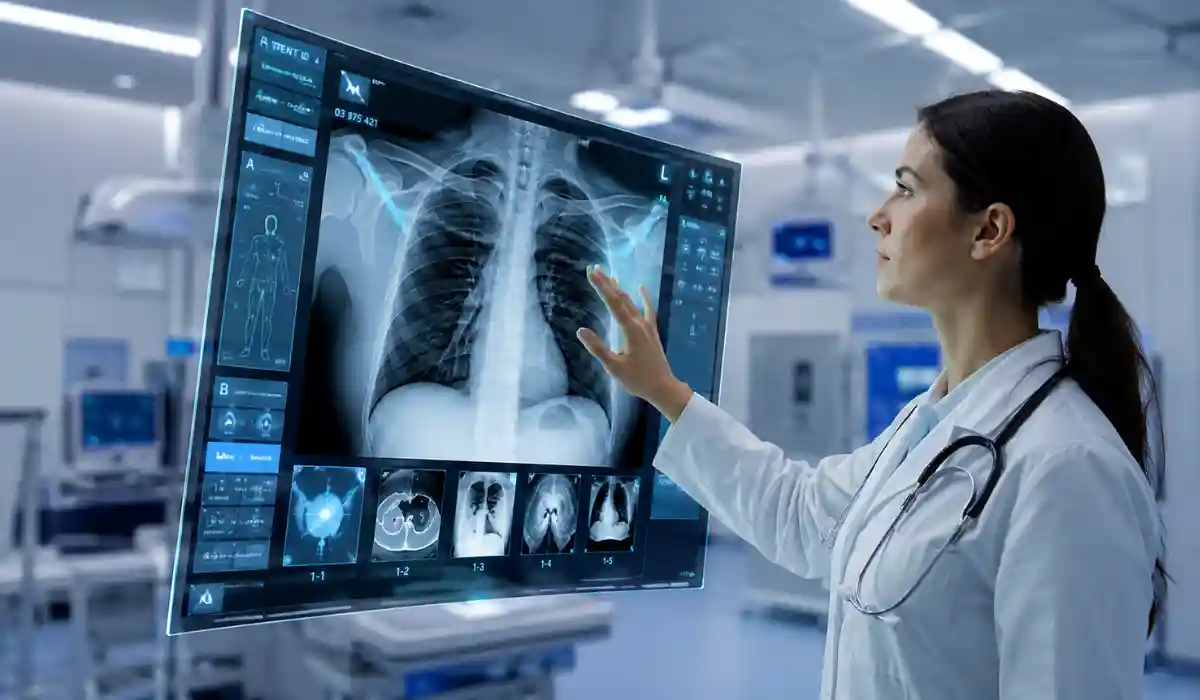
Radiology is one of the most important fields in modern medicine. It allows healthcare providers to see inside the body without surgery, helping them diagnose illnesses, monitor conditions, and guide treatments with greater accuracy.
Whether someone has a broken bone, unexplained pain, a suspected tumor, or a heart condition, radiology often plays a critical role in identifying the problem and helping doctors determine the best course of action.
Today, radiology is used in nearly every area of healthcare, from emergency medicine and surgery to cancer care and prenatal monitoring. Advances in medical imaging have transformed how diseases are detected and treated, making radiology an essential part of patient care.
What Is Radiology?
Radiology is a medical specialty that uses imaging technologies to examine the body’s internal structures. These imaging methods create detailed pictures of organs, bones, tissues, and blood vessels, helping healthcare providers identify injuries, diseases, and abnormalities.
The field is generally divided into two main branches:
Diagnostic Radiology
Diagnostic radiology focuses on creating and interpreting medical images to diagnose conditions. Radiologists analyze these images and provide detailed reports that help physicians make informed treatment decisions.
Interventional Radiology
Interventional radiology uses imaging guidance to perform minimally invasive procedures. Instead of traditional surgery, physicians can use imaging technology to guide instruments through small incisions, often resulting in faster recovery times and fewer complications.
Brief History Of Radiology
Radiology began in 1895 when German physicist Wilhelm Conrad Röntgen discovered X-rays. During an experiment, he noticed that invisible rays could pass through certain materials and create images of internal structures.
This groundbreaking discovery revolutionized medicine by allowing doctors to examine bones and internal organs without surgery. Within a short period, X-ray technology was being used in hospitals worldwide.
Over the following decades, additional imaging technologies such as ultrasound, computed tomography (CT), magnetic resonance imaging (MRI), and nuclear medicine further expanded the capabilities of radiology.
Today, medical imaging is more advanced than ever, providing highly detailed images that support accurate diagnoses and treatment planning.
Why Is Radiology Important?
Radiology plays a vital role in healthcare because many medical conditions cannot be diagnosed through physical examination alone. Imaging studies provide valuable information about what is happening inside the body.
Some key benefits of radiology include:
- Early detection of diseases
- Accurate diagnosis of injuries and illnesses
- Monitoring treatment progress
- Guiding minimally invasive procedures
- Supporting surgical planning
- Improving patient outcomes
Early diagnosis is particularly important for serious conditions such as cancer, cardiovascular disease, and neurological disorders. Detecting these conditions at an earlier stage often leads to more effective treatment and better long-term outcomes.
Common Types Of Radiology Exams
Several imaging technologies are used in radiology, each serving different medical purposes.
X-Ray
X-rays are one of the most commonly used imaging tests. They are especially effective for examining bones and detecting fractures, joint problems, infections, and certain lung conditions.
Computed Tomography (CT Scan)
A CT scan combines multiple X-ray images to create detailed cross-sectional views of the body. CT scans are frequently used to evaluate internal injuries, tumors, blood vessels, and organs.
Magnetic Resonance Imaging (MRI)
MRI uses magnetic fields and radio waves to create highly detailed images of soft tissues. It is commonly used to examine the brain, spine, muscles, ligaments, and internal organs.
Ultrasound
Ultrasound uses sound waves to create real-time images. It is widely used during pregnancy but is also valuable for examining organs, blood flow, and heart function.
Mammography
Mammography is a specialized type of X-ray designed to detect abnormalities within breast tissue. It plays an important role in breast cancer screening and early detection.
Nuclear Medicine And PET Scans
Nuclear medicine uses small amounts of radioactive material to evaluate how organs and tissues function. PET scans are often used in cancer diagnosis, heart disease evaluation, and neurological assessments.
How Radiologists Help Patients?
Radiologists are physicians who specialize in interpreting medical images. After reviewing imaging studies, they provide detailed reports to referring healthcare providers.
Their expertise helps identify:
- Fractures and injuries
- Tumors and cancers
- Infections
- Heart and vascular conditions
- Neurological disorders
- Digestive system abnormalities
- Musculoskeletal problems
Radiologists work closely with primary care physicians, surgeons, oncologists, cardiologists, and other specialists to ensure patients receive accurate diagnoses and appropriate treatment recommendations.
Role Of Interventional Radiology
Interventional radiology has become an increasingly important part of modern healthcare. Using imaging guidance, physicians can perform many procedures that previously required open surgery.
Examples include:
- Biopsies
- Tumor treatments
- Drainage procedures
- Vascular interventions
- Pain management treatments
- Kidney and liver procedures
Because these procedures are minimally invasive, patients often experience shorter recovery times, reduced discomfort, and lower risks compared to traditional surgery.
Future Of Radiology
Technology continues to drive advancements in radiology. Artificial intelligence, enhanced imaging systems, and improved software are helping radiologists identify abnormalities more efficiently and accurately.
These innovations are expected to improve diagnostic precision, reduce examination times, and expand access to quality healthcare services.
As medical imaging technology evolves, radiology will continue to play a central role in disease detection, treatment planning, and patient care.
Conclusion
Radiology is a cornerstone of modern medicine that enables healthcare providers to diagnose and treat a wide range of medical conditions.
From routine X-rays and ultrasounds to advanced MRI and CT scans, medical imaging provides valuable insights that help guide clinical decisions.
Whether detecting a broken bone, monitoring cancer treatment, evaluating heart disease, or performing minimally invasive procedures, radiology helps improve patient outcomes and supports nearly every medical specialty.
As technology continues to advance, radiology will remain one of the most important tools in delivering accurate, efficient, and effective healthcare.
FAQs
Radiology is used to diagnose injuries, monitor diseases, guide treatments, and help doctors see inside the body without surgery.
The two main types are diagnostic radiology and interventional radiology. Diagnostic radiology helps identify conditions, while interventional radiology guides minimally invasive procedures.
Yes. X-rays are one of the most common radiology exams and are often used to check bones, lungs, joints, and certain injuries.
A CT scan uses X-rays to create detailed images, while an MRI uses magnetic fields and radio waves, often for soft tissues like the brain and spine.
Radiology images are reviewed by radiologists, who are medical doctors trained to interpret imaging results and prepare reports for other physicians.
Most radiology exams are safe when performed properly. Some tests use radiation, but healthcare providers only recommend imaging when the benefit outweighs the risk.