
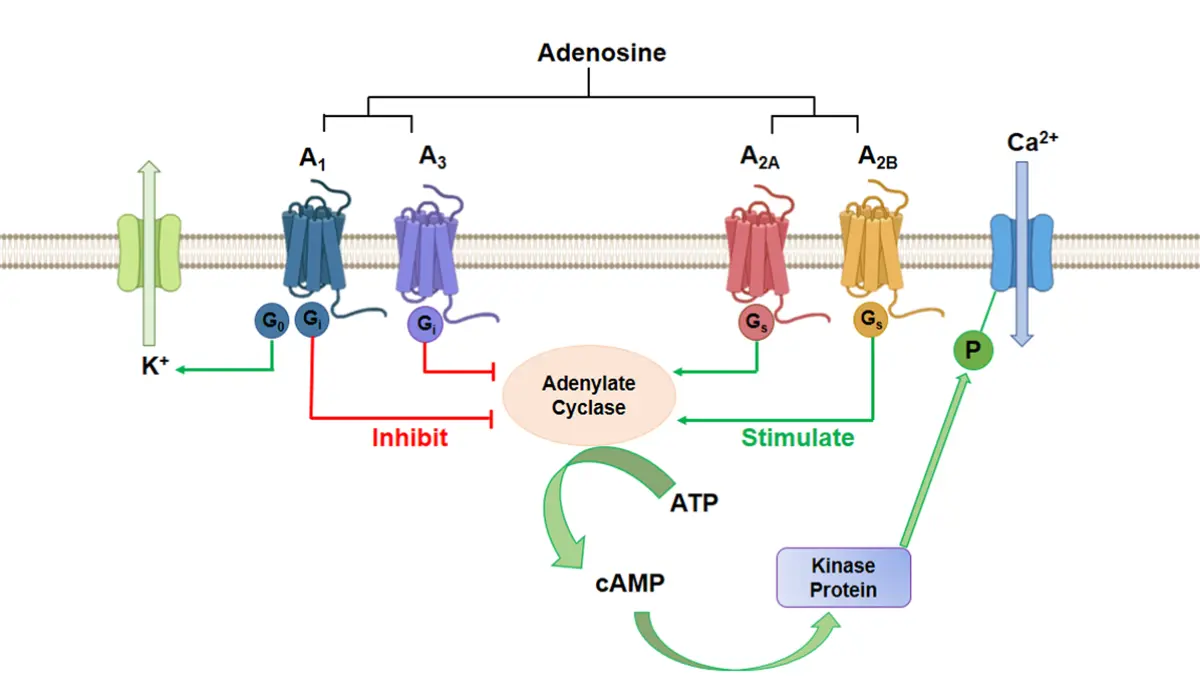
Adenosine receptors are cell-surface proteins that respond to adenosine, a natural chemical involved in sleep pressure, blood flow, heart rhythm, inflammation, and brain signaling. The four main types are A1, A2A, A2B, and A3, and each type affects the body in different ways.
These receptors matter because many everyday substances and medicines influence adenosine signaling. Caffeine blocks adenosine activity, while certain prescription medicines activate or block specific receptor types for heart, stress-test, or Parkinson’s disease care.
Adenosine Receptors at a Glance
Adenosine receptors help cells respond to adenosine, a natural chemical involved in sleep pressure, blood flow, heart rhythm, and inflammation.
Levels of adenosine can rise when the body stays awake for a long time, experiences stress, has low oxygen, or recovers from injury. These changes allow the body to adjust cell signaling based on energy needs and tissue stress.
Main Adenosine Receptor Types
| Receptor type | Main signaling pattern | Common areas of interest | Simple role |
| A1 | Gi/Go pathway | Brain, heart, nerves | Slows activity, supports sleep pressure, affects heart conduction |
| A2A | Gs pathway | Brain, blood vessels, immune cells | Supports blood vessel widening, dopamine balance, immune signaling |
| A2B | Gs pathway | Blood vessels, immune cells, tissues under stress | Often active when adenosine levels are higher |
| A3 | Gi/Go pathway | Immune cells, heart, inflammatory pathways | Studied for inflammation, tissue protection, and immune effects |
What Are Adenosine Receptors?
These receptors are docking sites on cells. When adenosine attaches to them, the cell receives a signal that can change nerve activity, blood vessel tone, inflammation, or heart rhythm.
Adenosine is not the same as adrenaline, caffeine, or ATP, although it is closely related to cellular energy pathways. It often acts like a “slow down and protect” signal during stress, fatigue, or low oxygen states.
The effect depends on the receptor type, body tissue, adenosine level, and whether a substance activates or blocks the receptor.
How Adenosine Signaling Works?
Adenosine is produced naturally in the body. It can build up during prolonged wakefulness, inflammation, intense activity, low oxygen, or tissue stress.
Once released outside cells, it binds to nearby receptors. This can change cell signaling through pathways such as cyclic AMP, calcium movement, potassium channels, and neurotransmitter release.
The body also clears adenosine quickly. That short action helps explain why some adenosine-related medications have brief but powerful effects in clinical settings.
A1 Receptors
A1 receptors are often linked with calming or slowing signals. In the brain, A1 activity may help reduce excitatory nerve signaling and support sleep pressure.
In the heart, A1 activation can slow conduction through the atrioventricular node. This is one reason IV adenosine can be used in emergency or monitored settings for certain fast heart rhythms.
Too much slowing of heart conduction can be risky. That is why adenosine-based heart treatment requires medical supervision.
A2A Receptors
A2A receptors are important in the brain, blood vessels, platelets, and immune cells. They are also a major target in caffeine research and Parkinson’s disease drug development.
In the brain, A2A signaling interacts with dopamine pathways, especially in areas involved in movement control. This connection explains why A2A antagonists are studied and used in selected Parkinson’s disease treatment.
In blood vessels, A2A activation can support vasodilation. This action is used by certain stress-test medicines that help increase coronary blood flow during medical imaging.
A2B Receptors
A2B receptors tend to need higher adenosine levels for stronger activation compared with some other types. For this reason, they are often discussed in tissue stress, inflammation, and low-oxygen conditions.
They may influence blood vessel activity, immune responses, lung pathways, gut inflammation, and tissue remodeling. Research is ongoing, and many effects depend on the disease setting.
A2B signaling can be protective in some contexts and harmful in others. Readers should avoid simple claims that one receptor is always “good” or “bad.”
A3 Receptors
A3 receptors are found in immune-related and tissue-protection pathways. Researchers study them in inflammation, pain, ischemia, cancer biology, and immune signaling.
Some A3-targeted compounds remain mainly research or investigational topics. Their effects may vary by species, tissue type, dose, and disease state.
Because this area is complex, supplement-style claims about A3 activation or blocking should be viewed cautiously unless supported by clinical evidence.
Caffeine and Adenosine Receptors
Caffeine is widely known because it blocks adenosine signaling. By blocking adenosine’s calming effect in the brain, caffeine can make a person feel more awake and alert.
This does not mean caffeine “creates energy.” It mainly reduces the feeling of sleepiness for a period of time, while underlying sleep debt may still remain.
Too much caffeine may cause jitteriness, anxiety, insomnia, fast heartbeat, stomach upset, or palpitations in sensitive people. Some people should limit intake, especially during pregnancy or when heart rhythm, blood pressure, anxiety, or sleep problems are present.
Medicines That Affect Adenosine Signaling
Some medicines activate adenosine pathways, while others block selected receptor types. These medicines are not interchangeable because receptor selectivity and clinical use matter.
Adenosine injection is used in monitored medical settings for certain supraventricular tachycardias. It acts quickly and can briefly slow electrical conduction through the AV node.
Regadenoson is an A2A agonist used during pharmacologic stress testing. Istradefylline is an A2A antagonist used as an add-on treatment for “off” episodes in adults with Parkinson’s disease who take levodopa/carbidopa.
Agonists vs Antagonists
An agonist activates a receptor. For example, adenosine and some stress-test medicines activate specific adenosine pathways.
An antagonist blocks a receptor. Caffeine is a nonselective antagonist, while some prescription medicines target more specific receptor subtypes.
This difference matters. Activating a receptor can produce very different effects from blocking it, even when both actions involve the same signaling system.
OTC Substances vs Prescription Medicines
Caffeine is available in coffee, tea, cola, energy drinks, chocolate, and some OTC products. Because sources add up, people can unintentionally consume more than they realize.
Prescription adenosine-related medicines are used for specific medical purposes. They may affect heart rhythm, blood pressure, breathing symptoms, movement symptoms, or stress-test results.
A pharmacist can help check whether caffeine, decongestants, stimulants, asthma medicines, heart medicines, or Parkinson’s medicines may interact with a person’s condition or treatment plan.
Why These Receptors Matter for Sleep?
Adenosine activity is one reason sleep pressure increases the longer a person stays awake. Blocking this pathway with caffeine can temporarily reduce drowsiness.
However, caffeine can also delay sleep onset, shorten sleep time, or reduce sleep quality in sensitive users. Timing matters because caffeine taken later in the day can still affect bedtime.
People with insomnia, anxiety, palpitations, pregnancy, or uncontrolled blood pressure should discuss safe caffeine limits with a clinician.
Why They Matter for the Heart?
Adenosine signaling affects heart rate, electrical conduction, blood vessels, and oxygen demand. In medical settings, doctors can use this biology for diagnosis or treatment.
IV adenosine may help stop some AV node-dependent fast rhythms, but it can cause brief flushing, chest pressure, shortness of breath, dizziness, or a sense of impending doom.
People should not try to self-treat rapid heart rhythm with caffeine changes, supplements, or online protocols. Fast or irregular heartbeat needs proper evaluation.
Why They Matter for the Brain?
In the nervous system, adenosine signaling helps regulate alertness, fatigue, neurotransmitter release, and movement pathways.
A2A activity interacts with dopamine signaling in movement-related brain regions. This is why A2A antagonism is relevant to certain Parkinson’s disease treatments.
Brain effects are not limited to wakefulness. Researchers also study adenosine pathways in pain, mood, seizures, neuroinflammation, and neurodegenerative diseases, but many uses remain research-focused.
Why They Matter for Inflammation and Immunity?
Adenosine can act as a local signal during tissue stress, low oxygen, or inflammation. It may help reduce excessive immune activity in some settings.
At the same time, adenosine-rich environments can sometimes suppress helpful immune responses. This is one reason researchers study adenosine pathways in cancer and chronic inflammatory diseases.
The same pathway can have different effects depending on the tissue, receptor type, timing, and disease stage.
Testing and Genetic Considerations
Most people do not need testing for adenosine receptor function. Symptoms like tiredness, insomnia, palpitations, or caffeine sensitivity are not enough to diagnose a receptor problem.
Some genes, such as ADORA1, ADORA2A, ADORA2B, and ADORA3, encode the main receptor types. Genetic variation may influence caffeine sensitivity or disease research, but routine consumer testing has limits.
A doctor may evaluate symptoms with sleep history, medication review, blood pressure checks, heart rhythm testing, lab work, or specialist referral when needed.
Side Effects and Safety Concerns
Safety depends on what is affecting the receptor. Caffeine, IV adenosine, regadenoson, theophylline, and istradefylline have different risk profiles.
Caffeine may worsen insomnia, anxiety, reflux, tremor, palpitations, and blood pressure symptoms in some people. Energy drinks and concentrated caffeine products can increase risk because dosing may be harder to judge.
Prescription medicines that affect this pathway may cause chest discomfort, flushing, low or high blood pressure, dizziness, shortness of breath, abnormal rhythm symptoms, hallucinations, dyskinesia, or other drug-specific side effects. Always follow the prescribing information and clinician instructions.
Special Groups
Pregnant people should ask a clinician about caffeine limits and medication safety. Some adenosine-related medicines may be used only when the benefits outweigh the risks.
Older adults may be more sensitive to sleep disruption, palpitations, dizziness, blood pressure changes, and drug interactions. Medication review is especially important in this group.
People with asthma, COPD, heart rhythm disorders, uncontrolled blood pressure, anxiety disorders, Parkinson’s disease, seizure history, or complex medication lists should seek personalized advice before making major caffeine or medication changes.
What to Do Next?
For general learning, focus on the four receptor types and the difference between agonists and antagonists. This makes the topic easier to understand.
For caffeine concerns, track total daily intake from coffee, tea, energy drinks, pre-workout products, chocolate, and medications. Also note sleep quality, palpitations, anxiety, and blood pressure changes.
For symptoms or medication questions, bring a full list of prescriptions, OTC products, supplements, and caffeine sources to a doctor or pharmacist.
Common Mistakes to Avoid
One mistake is assuming caffeine gives the body true energy. It mainly blocks sleepiness signals for a limited time.
Another mistake is treating all receptor types as the same. A1, A2A, A2B, and A3 can have different effects depending on where they are active.
A third mistake is applying research findings directly to supplements or self-treatment. Cell and animal studies do not always translate into safe or effective human treatment.
When to Seek Medical Help?
Seek urgent medical care for chest pain, fainting, severe shortness of breath, severe weakness, confusion, blue lips, or a very fast or irregular heartbeat that does not settle.
Call a healthcare provider if caffeine seems to trigger frequent palpitations, panic-like symptoms, insomnia, high blood pressure readings, tremor, or worsening reflux.
Also seek advice before using stimulant products if you take heart medicines, asthma medicines, ADHD medicines, antidepressants, Parkinson’s medicines, or blood pressure medicines.
Questions to Ask a Doctor or Pharmacist
- Could caffeine be worsening my sleep, anxiety, blood pressure, or palpitations?
- Do any of my medicines affect adenosine signaling?
- Should I avoid caffeine before a stress test or heart procedure?
- Is my rapid heartbeat likely to need ECG testing?
- Could my Parkinson’s medicine interact with caffeine or other stimulants?
- Are energy drinks safe with my health history?
- What caffeine limit is reasonable for me?
- Should I reduce caffeine gradually to avoid withdrawal headaches?
- Which symptoms need urgent care?
- Are any supplements I take likely to affect my heart rate or sleep?
Conclusion
Adenosine receptors are important cell-signaling proteins that help regulate sleep pressure, alertness, heart conduction, blood vessel tone, movement pathways, inflammation, and tissue stress responses.
The safest approach is to understand the basics, avoid self-treatment claims, track caffeine and symptoms, and ask a doctor or pharmacist before changing medications or using stimulant products.
FAQs
Adenosine receptors are proteins on cell surfaces that respond to adenosine. They help regulate sleep pressure, brain signaling, heart conduction, blood vessel tone, inflammation, and stress responses.
The four main types are A1, A2A, A2B, and A3. Each type has different signaling patterns, tissue locations, and effects in the brain, heart, blood vessels, and immune system.
Caffeine blocks adenosine signaling, especially in the brain. This can temporarily reduce sleepiness and improve alertness, but it may also worsen insomnia, anxiety, tremor, or palpitations.
Yes. Adenosine activity helps build sleep pressure during wakefulness. Caffeine can block this signal, which may make someone feel awake even when the body still needs rest.
Yes. Adenosine signaling can affect heart electrical conduction and blood vessels. IV adenosine is used only in monitored medical settings for certain fast heart rhythms.
An antagonist blocks a receptor. Caffeine is a common nonselective antagonist, while some prescription drugs more selectively block certain subtypes for specific medical uses.