
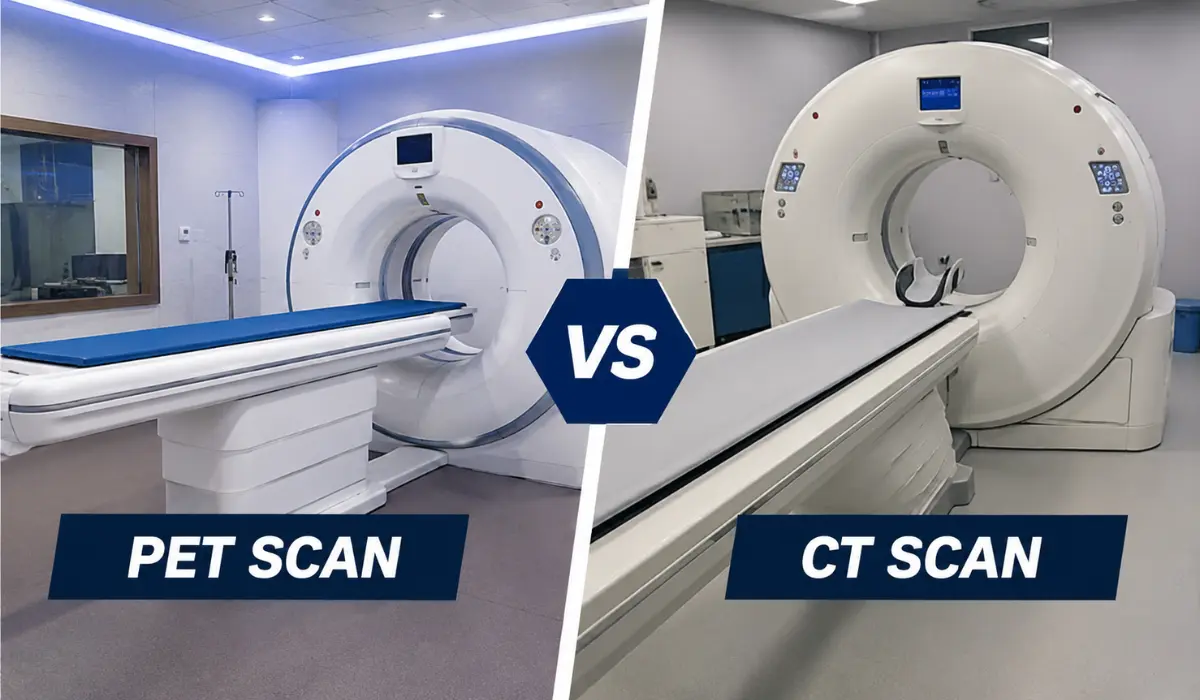
Medical imaging plays a crucial role in modern healthcare. Two commonly used diagnostic tools are the PET scan and the CT scan. Both help doctors identify and monitor health issues, but they work differently and are used in specific situations. Understanding the differences can help patients make informed decisions about their care.
PET scans and CT scans provide valuable information about the body, yet each offers unique insights. While a CT scan captures detailed pictures of the body’s structures, a PET scan highlights how organs and tissues function. Knowing which scan to choose depends on the medical concern, symptoms, and the type of information a doctor needs.
What Makes CT Scans Important?
CT scans, or computed tomography scans, are widely used to detect structural abnormalities in the body. They combine multiple X-ray images to create detailed cross-sectional pictures of bones, organs, and tissues. These images help doctors identify tumors, fractures, infections, and other conditions quickly and accurately.
The speed and detail of CT scans make them suitable for emergency situations, such as internal injuries after accidents. CT scans are non-invasive and typically completed in minutes. They can also guide doctors during procedures like biopsies, providing precise imaging to improve safety and accuracy.
Why PET Scans Are Unique?
A PET scan, or positron emission tomography scan, focuses on metabolic activity rather than structure. It uses a small amount of radioactive tracer that highlights areas of high chemical activity in the body. This is particularly helpful in identifying cancer, heart problems, and brain disorders.
Unlike CT scans, PET scans can detect disease at an early stage before structural changes appear. This functional insight allows doctors to understand how tissues are working and whether treatments are effective. It is often combined with a CT scan for a complete view of both function and structure.
Differences In Imaging And Detail
CT scans provide precise images of the body’s physical structures. They show size, shape, and location of organs or abnormalities. This structural detail makes them ideal for assessing injuries, detecting tumors, and monitoring changes in bones and organs over time.
PET scans, on the other hand, focus on how cells are functioning. They highlight areas with unusual metabolic activity, such as rapidly growing cancer cells. While the images are less detailed structurally, they reveal vital information about disease progression and response to therapy, which a CT scan alone may miss.
Common Uses For Each Scan
CT scans are often used to evaluate trauma, infections, and abnormalities in bones, lungs, or abdominal organs. They are also helpful for planning surgeries, guiding needle biopsies, and monitoring the effectiveness of treatments for certain conditions.
PET scans are primarily used in oncology, cardiology, and neurology. They detect cancer, check for heart damage, and assess brain disorders like Alzheimer’s disease. PET scans are especially useful when doctors need to see how tissues are functioning rather than simply their size or shape.
Safety And Preparation
Both PET and CT scans are generally safe, but there are precautions. CT scans involve exposure to X-rays, which is minimal but should be considered, especially for pregnant women or frequent scans. Patients may need to avoid food or drink before the scan and remain still during imaging.
PET scans involve a radioactive tracer, but the exposure is low and usually leaves the body within a few hours. Patients may need to fast or limit physical activity before the scan. Doctors also consider health conditions and allergies before recommending a PET scan.
Combining PET And CT
In many cases, doctors use PET and CT scans together. This approach, known as PET/CT imaging, provides both structural and functional information. By combining the scans, doctors can pinpoint the exact location of abnormal activity and plan treatment more effectively.
PET/CT scans are particularly useful in cancer care. They help in identifying tumor boundaries, assessing response to therapy, and detecting metastasis. This combination allows for a more accurate diagnosis and personalized treatment plan.
Cost And Availability
CT scans are more widely available and generally less expensive than PET scans. They are commonly found in hospitals and diagnostic centers, making them accessible for routine checks and emergencies. Insurance often covers medically necessary CT scans.
PET scans are costlier and less available due to the need for specialized equipment and radioactive tracers. They are usually scheduled in hospitals or specialized imaging centers. Insurance coverage may depend on the medical necessity and the specific condition being evaluated.
Patient Experience
CT scans are quick, non-invasive, and require minimal preparation. Patients lie on a table that slides into a large, circular machine, and the scan usually takes only a few minutes. Some may experience slight discomfort from staying still.
PET scans take longer, typically 30 minutes to an hour, and may require the patient to rest quietly after the tracer is administered. The procedure is also non-invasive but may feel slightly different due to the radioactive tracer injection. Patients can usually resume normal activities afterward.
Conclusion
PET scans and CT scans serve different purposes in medical imaging. CT scans focus on structural details, making them ideal for detecting injuries, tumors, and organ abnormalities. PET scans reveal how tissues and organs function, providing crucial insights for conditions like cancer, heart disease, and brain disorders.
Choosing the right scan depends on the information doctors need. Often, combining both scans offers the most complete picture, helping guide accurate diagnoses and effective treatment plans for patients.
FAQs
Both scans are safe when used appropriately. CT scans use X-rays, while PET scans involve a small radioactive tracer. Doctors weigh benefits against risks.
No. CT scans show structure, and PET scans show function. Often, both are used together for a complete picture.
CT scans are quick, usually a few minutes. PET scans take longer, often 30–60 minutes, depending on the area examined.
Both scans are non-invasive. Patients may feel minor discomfort from lying still or from the injection used in PET scans.
Coverage depends on medical necessity. CT scans are commonly covered, while PET scans may require pre-authorization based on the condition.
References
Mayo Clinic: CT Scan – Provides detailed information on CT scans, their uses, preparation, and safety considerations.
https://www.mayoclinic.org/tests-procedures/ct-scan/about/pac-20393675
Mayo Clinic: PET Scan – Explains PET scan procedures, applications in detecting cancer and other diseases, and what patients can expect.
https://www.mayoclinic.org/tests-procedures/pet-scan/about/pac-20385078
RadiologyInfo.org: PET/CT Scans – Offers comprehensive guidance on combined PET/CT imaging, differences from individual scans, and clinical relevance.
https://www.radiologyinfo.org/en/info/petct