
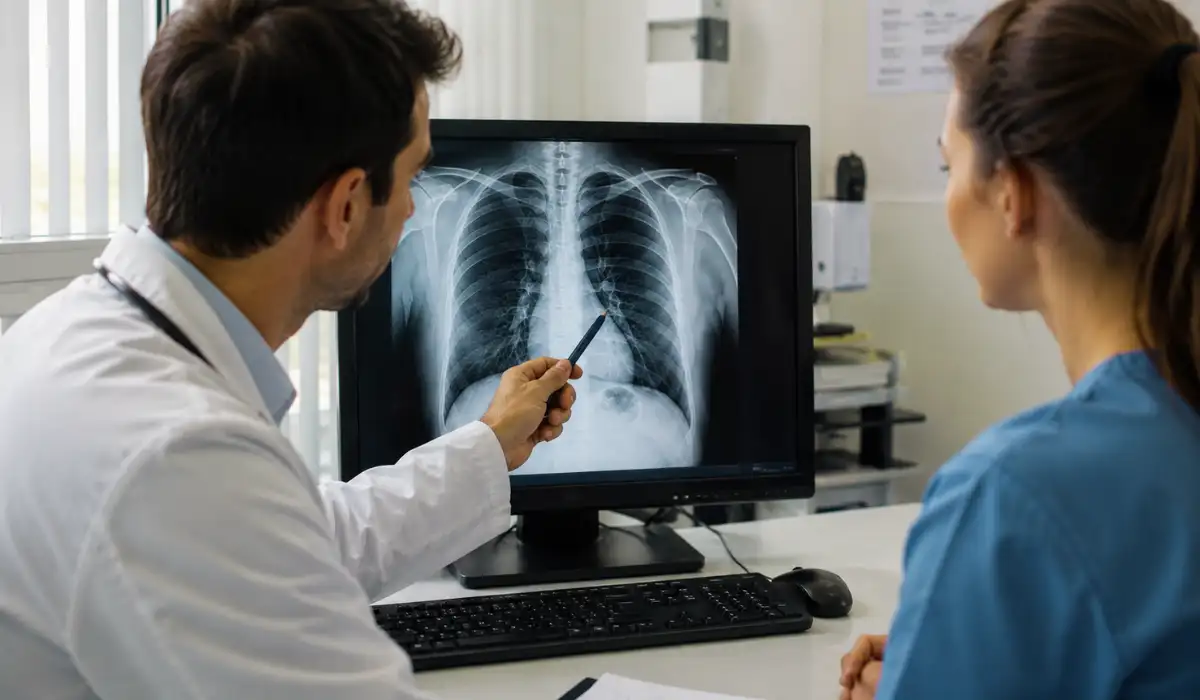
Radiology technicians play an essential role in modern healthcare. Every day, physicians rely on medical imaging to diagnose injuries, monitor diseases, and guide treatment decisions. Behind many of these imaging procedures are skilled healthcare professionals known as radiology technicians.
If you’ve ever had an X-ray after a sports injury, undergone a CT scan, or received another imaging test, chances are a radiology technician helped perform the procedure. These professionals combine technical expertise with patient care to produce the images that physicians use to make accurate medical decisions.
As demand for healthcare services continues to grow, radiology technology remains one of the most important and rewarding healthcare careers available today.
What Is A Radiology Technician?
A radiology technician, also called a radiologic technologist or radiographer, is a healthcare professional trained to perform diagnostic imaging examinations. Their primary responsibility is to operate medical imaging equipment that creates detailed pictures of the inside of the human body.
These images help physicians identify and evaluate various medical conditions, including fractures, infections, tumors, heart disease, and other health concerns.
Radiology technicians work directly with patients and imaging equipment while ensuring that procedures are performed safely and accurately.
What Does A Radiology Technician Do?
Radiology technicians perform a wide range of duties before, during, and after imaging procedures.
Some of their common responsibilities include:
- Preparing patients for imaging exams
- Explaining procedures and answering questions
- Positioning patients correctly for imaging
- Operating X-ray and imaging equipment
- Ensuring image quality and accuracy
- Following radiation safety protocols
- Maintaining patient records
- Assisting physicians during certain procedures
Their goal is to obtain clear, accurate images while helping patients remain comfortable throughout the process.
Where Do Radiology Technicians Work?
Radiology technicians work in a variety of healthcare environments. While hospitals remain one of the most common workplaces, many opportunities exist in other medical settings.
Common workplaces include:
Hospitals
Hospitals often provide the widest range of imaging services and may expose technicians to emergency, surgical, and inpatient imaging procedures.
Imaging Centers
Outpatient imaging centers specialize in diagnostic testing and often offer a more predictable schedule compared to hospital environments.
Physician Offices
Many specialty clinics and physician practices employ radiology technicians to perform routine imaging exams on-site.
Urgent Care Centers
Urgent care facilities frequently use X-rays to diagnose fractures, injuries, and certain medical conditions.
Specialty Clinics
Technicians may also work in orthopedic clinics, cancer treatment centers, cardiovascular facilities, and women’s health practices.
Types Of Imaging Performed By Radiology Technicians
Radiology technicians may work with various imaging technologies depending on their training and certifications.
X-Ray Imaging
X-rays are the most common imaging procedure performed by radiology technicians. These exams help evaluate bones, joints, lungs, and other structures.
Computed Tomography (CT)
CT technologists operate specialized scanners that create detailed cross-sectional images of the body.
Magnetic Resonance Imaging (MRI)
MRI technologists use magnetic fields and radio waves to produce detailed images of soft tissues, organs, and the nervous system.
Mammography
Mammography technologists specialize in breast imaging used for screening and diagnostic purposes.
Fluoroscopy
This imaging technique provides real-time moving images that help physicians perform certain procedures.
Why Radiology Technicians Are Important?
Radiology technicians play a critical role in patient care because accurate medical imaging is often the foundation of diagnosis and treatment planning.
Doctors use imaging results to:
- Diagnose injuries and illnesses
- Monitor treatment progress
- Detect diseases early
- Plan surgical procedures
- Guide minimally invasive treatments
Without high-quality imaging, many medical conditions would be much more difficult to diagnose accurately.
Skills Needed To Become A Radiology Technician
Successful radiology technicians possess a combination of technical and interpersonal skills.
Important skills include:
Communication Skills
Technicians interact with patients daily and must explain procedures clearly while helping individuals feel comfortable.
Attention To Detail
Small positioning errors can affect image quality. Precision is essential when performing imaging exams.
Technical Knowledge
Radiology technicians must understand imaging equipment, anatomy, radiation safety, and healthcare procedures.
Compassion And Patience
Patients may be anxious, uncomfortable, or experiencing pain. Compassionate care helps improve the patient experience.
Problem-Solving Ability
Technicians often need to adapt procedures based on patient needs, medical conditions, or equipment requirements.
Education And Training Requirements
Most radiology technicians complete an accredited radiologic technology program. These programs typically combine classroom instruction with hands-on clinical training.
Students learn:
- Human anatomy
- Medical terminology
- Radiation physics
- Patient care techniques
- Imaging procedures
- Radiation safety
After completing their education, many technicians pursue professional certification and state licensure requirements, depending on local regulations.
Career Growth Opportunities
Radiology technology offers several opportunities for career advancement.
Experienced technicians may pursue specialized certifications in:
- MRI
- CT scanning
- Mammography
- Bone densitometry
- Cardiovascular imaging
- Interventional radiology
Some professionals eventually move into supervisory, educational, or healthcare management roles.
Job Outlook For Radiology Technicians
The demand for diagnostic imaging continues to grow as healthcare services expand and the population ages.
Medical imaging remains essential for diagnosing and managing a wide range of health conditions. As a result, radiology technicians continue to enjoy strong employment opportunities and career stability across many healthcare settings.
Advances in imaging technology are also creating new opportunities for professionals who stay current with specialized training and certifications.
Conclusion
A radiology technician is a healthcare professional responsible for performing diagnostic imaging procedures that help physicians diagnose and treat medical conditions.
From X-rays and CT scans to MRI and mammography, these specialists play an important role in modern healthcare.
Combining technical expertise, patient interaction, and advanced medical technology, radiology technicians help provide the accurate imaging that supports effective patient care.
For individuals interested in healthcare and technology, radiologic technology offers a rewarding career with strong job prospects and opportunities for growth.
Frequently Asked Questions
A radiology technician performs imaging procedures such as X-rays and CT scans, while a radiologist is a medical doctor who interprets the images and helps diagnose medical conditions.
Most radiology technicians complete an accredited radiologic technology program in about two years, followed by certification or licensing requirements where applicable.
No. Many radiology technicians are trained to perform additional imaging procedures such as CT scans, MRI scans, mammography, and fluoroscopy examinations.
Yes. Radiology technicians interact with patients daily, explain imaging procedures, position patients for scans, and help ensure comfort throughout the examination.
Radiology technicians work around imaging equipment but follow strict safety protocols, protective measures, and radiation monitoring procedures to minimize exposure.
Yes. Many professionals pursue advanced certifications in areas such as CT imaging, MRI, mammography, interventional radiology, and cardiovascular imaging.