
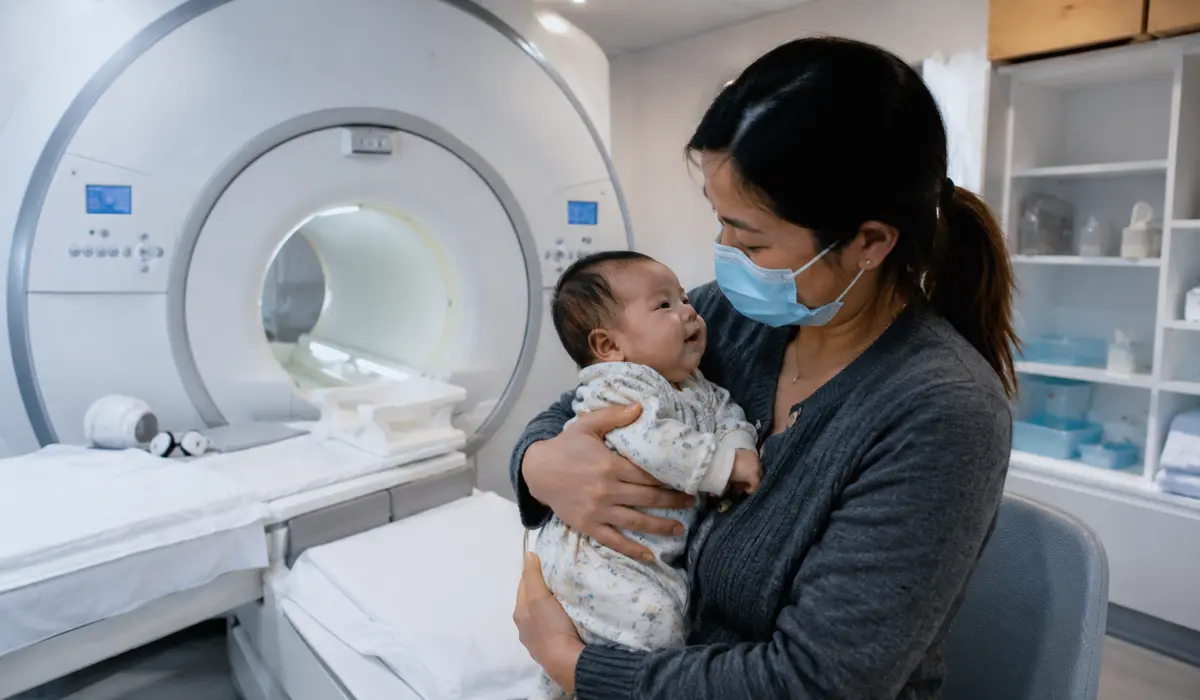
A baby MRI scan can feel stressful for parents, especially when the child is very young. Many families worry about safety, preparation, sedation, results, and what the scan may mean for their baby’s health.
MRI is commonly used when doctors need detailed pictures of the brain, spine, joints, organs, or other body areas. It does not use ionizing radiation, which makes it different from X-rays and CT scans.
Why A Doctor May Recommend A Baby MRI Scan?
Doctors may suggest a baby MRI scan when they need clearer images than other tests can provide. It may be used to check the brain, spine, soft tissues, birth-related concerns, unexplained symptoms, or follow-up findings from another scan.
For parents, the scan is usually not the final answer by itself. It is one part of the full medical picture, along with symptoms, physical exams, lab tests, and the doctor’s judgment.
Is A Baby MRI Scan Safe?
A baby MRI scan is generally considered safe when done by trained medical staff. MRI uses a strong magnet and radio waves to create detailed images, not radiation. This is why doctors may prefer it for certain pediatric cases.
The main safety concern is not usually the MRI itself, but whether the baby needs sedation or anesthesia to stay still. If sedation is needed, the medical team will explain fasting rules, monitoring, and recovery steps before the scan.
Preparing Your Baby Before The MRI
Preparation depends on your baby’s age, health, scan type, and whether sedation is planned. Parents may be told to avoid feeding the baby for a certain number of hours before the appointment if anesthesia or sedation is required.
You should also tell the medical team if your baby has a fever, cough, cold, breathing issue, allergy, implant, or recent illness. In some cases, the scan may be delayed for safety reasons.
Sedation And Staying Still During The Scan
Babies need to stay very still during an MRI because movement can blur the images. Some babies can be scanned while naturally asleep, especially if they are fed, wrapped, and settled before the test.
In other cases, sedation or anesthesia may be recommended. During a sedated MRI, the child’s breathing, heart rate, oxygen level, and blood pressure are usually monitored closely by the medical team.
What Parents Can Expect On Scan Day?
On the day of the baby MRI scan, you may be asked to arrive early for checks, paperwork, and preparation. Your baby may need to wear a hospital gown, and metal items must be removed because MRI machines use powerful magnets.
The scan itself may take different amounts of time depending on the body area and the images needed. Some scans are short, while others may take longer if several image sets are required.
After The Baby MRI Scan
If your baby does not receive sedation, you may usually leave soon after the scan unless the doctor gives different instructions. Some children can return to normal activities right away after a non-sedated MRI.
If sedation is used, your baby may be sleepy for several hours, and some children may remain more tired than usual for the rest of the day. Parents are usually given home-care instructions before leaving.
Understanding MRI Results
The person doing the scan usually cannot explain the results during the appointment. A radiologist reviews the images and sends a report to the doctor who ordered the test.
The waiting time for results can vary by hospital, clinic, and urgency. Your baby’s doctor will explain what the findings mean and whether any follow-up care, treatment, or extra testing is needed.
Questions Parents Should Ask Before The Scan
Parents should ask why the MRI is needed, what body area will be scanned, whether contrast dye is required, and whether sedation may be used. These questions help families feel more prepared.
It is also helpful to ask about feeding rules, arrival time, how long the appointment may take, and when results are expected. Clear instructions can reduce stress on the day of the scan.
When To Call The Doctor After The Scan?
After a sedated baby MRI scan, contact the medical team if your baby is very hard to wake, has breathing trouble, repeated vomiting, unusual weakness, or anything that feels concerning.
If contrast dye was used, ask the hospital what reactions to watch for. Serious reactions are rare, but parents should still follow the safety advice given by the care team.
Final Thoughts
A baby MRI scan can be worrying for parents, but it is often an important tool for getting clear images without radiation. The scan may help doctors better understand a symptom, condition, injury, or development-related concern.
The best step is to follow the hospital’s instructions carefully and ask questions before the appointment. When parents know what to expect, the process becomes easier to manage.
Frequently Asked Questions
Yes, MRI is generally safe for babies because it does not use radiation. It is painless, and the scanner does not touch the child.
Some babies may need sedation because they must stay completely still during the scan. The medical team decides this based on age and scan type.
Yes, MRI is generally safe for a 2-year-old. In some cases, doctors may use contrast dye to get clearer internal images.
A baby MRI usually takes about 30 to 90 minutes. The exact time depends on the body area being scanned and image details needed.
MRI is usually safe for children. The main concern is implanted metal objects or devices, so screening is done before entering the scan room.