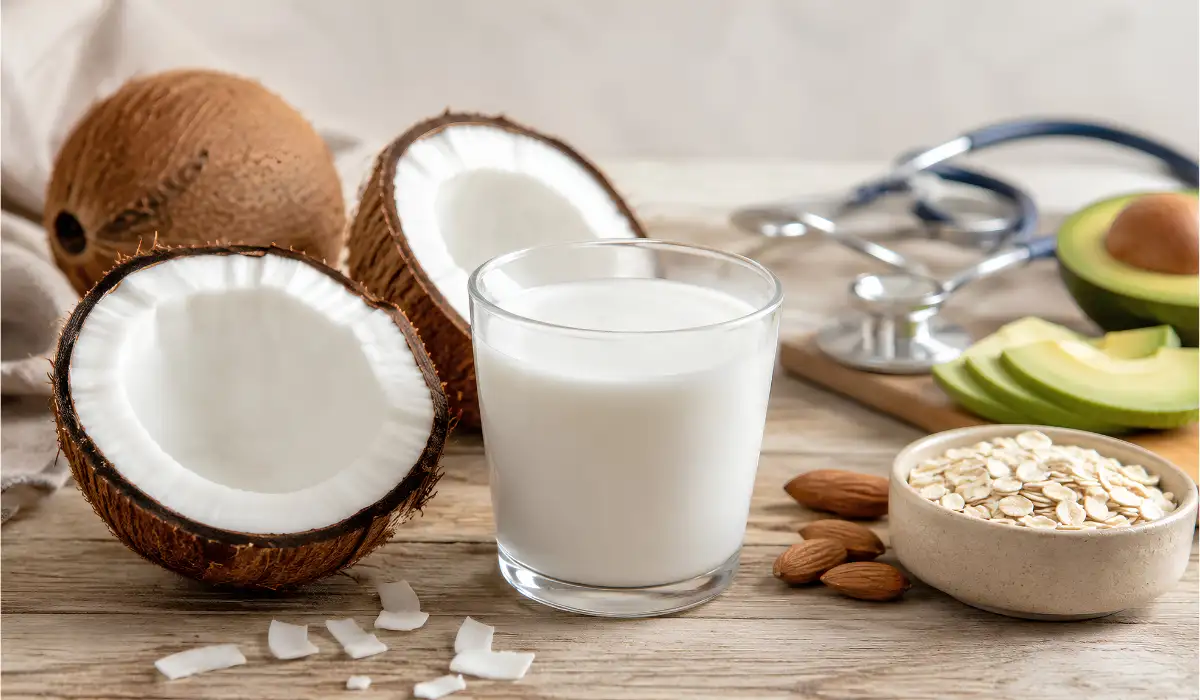
Coconut milk is not automatically bad for cholesterol, but it can become a concern when used often or in large amounts. The issue is not dietary cholesterol, because coconut milk comes from a plant and contains no cholesterol. The real concern is its saturated fat content, especially in full-fat canned coconut milk used for rich creamy dishes at home also.
Full-fat coconut milk is rich, thick, and flavorful, but it can add a large amount of saturated fat to one meal. Eating too much saturated fat may raise LDL cholesterol, often called bad cholesterol, in some people. Higher LDL levels can increase heart health concerns over time, especially when the overall diet is also high in fatty foods and calories.
Small amounts of coconut milk may still fit into a balanced diet. For example, using a few tablespoons in curry, soup, or oats is different from drinking large servings daily. If your cholesterol is already high, it is better to use coconut milk carefully, choose lighter options, and balance meals with fiber-rich, heart-friendly foods most days for better cholesterol control.
Coconut Milk Nutrition Data
Coconut milk can vary by type. Full-fat canned coconut milk is much higher in calories and saturated fat than carton coconut milk drinks. That is why reading the label matters before using it regularly.
| Type of Coconut Milk | Approximate Calories | Saturated Fat | Cholesterol |
|---|---|---|---|
| Full-fat canned, 1 cup | About 445 | About 43g | 0mg |
| Light canned, 1 cup | Lower | Moderate | 0mg |
| Carton coconut drink, 1 cup | Much lower | Low to moderate | 0mg |
The biggest difference is concentration. Canned coconut milk is used for curries, soups, and desserts. Carton coconut milk is usually diluted and often used like milk.
Why Saturated Fat Matters?
Saturated fat matters because it can influence cholesterol levels in the blood, especially LDL cholesterol. LDL cholesterol is often called bad cholesterol because too much of it may collect in artery walls. Over time, this buildup can narrow blood vessels and may raise the risk of heart disease, stroke, and circulation problems in higher-risk adults.
HDL cholesterol is often called good cholesterol because it helps carry extra cholesterol away from the blood vessels and back to the liver. A heart-friendly diet should support healthier LDL and HDL balance. Coconut milk may not affect everyone the same way, but its high saturated fat content can still be a concern.
Coconut milk contains mostly saturated fat, even though it is plant-based. This does not mean it must be avoided completely. The key is how much and how often you use it. Small servings may be reasonable, but large daily portions with butter, cheese, fried foods, or processed meats can push saturated fat intake too high.
Does Coconut Milk Raise LDL Cholesterol?
Coconut milk may raise LDL cholesterol in some people because it contains a high amount of saturated fat. The response can vary from person to person. Genetics, weight, activity level, fiber intake, total calories, and the rest of your diet can affect how your cholesterol changes with coconut milk use.
Some people mention coconut’s medium-chain fats, but that does not remove the saturated fat concern. Coconut milk should not be used like olive oil, nuts, seeds, or avocado. If it often replaces healthier fats, it may make LDL cholesterol harder to improve through diet and lifestyle changes.
People with high LDL cholesterol, heart disease, diabetes, high blood pressure, or a family history of heart problems should be more careful. If you use coconut milk often, ask your doctor or dietitian for guidance. A lipid panel can show how your diet affects cholesterol levels.
Is Light Coconut Milk A Better Option?
Light coconut milk is usually a better choice for cholesterol-conscious diets because it has less fat than full-fat canned coconut milk. It still adds coconut flavor and a creamy texture, but with fewer calories and less saturated fat per serving. This makes it easier to enjoy coconut-based recipes while keeping portions more balanced.
You can also dilute full-fat coconut milk with water, broth, tomato sauce, or vegetable puree while cooking. This reduces saturated fat per serving without removing the flavor completely. Adding beans, lentils, or vegetables can also thicken the dish and increase fiber, which supports a more heart-friendly meal.
Light coconut milk still needs label checking. Some brands may contain added sugar, stabilizers, or different fat levels. Choose unsweetened options when possible. If you use coconut milk often, rotate it with soy milk, oat milk, low-fat dairy, or other lower-fat choices during the week.
How To Use Coconut Milk More Safely?
Use coconut milk as a flavor ingredient, not the main fat source every day. A few tablespoons can add creaminess to curry, soup, oatmeal, smoothies, or sauces without making the meal too heavy. This helps you enjoy coconut taste while keeping saturated fat lower.
Choose light coconut milk for recipes you make often. Avoid pairing it with butter, cream, fatty meat, fried foods, or processed meats in the same meal. These combinations can raise saturated fat and calories quickly, making regular meals less helpful for cholesterol control.
If you monitor cholesterol, watch your blood test results after diet changes. Food affects people differently, and LDL levels show how your body responds. If LDL rises, reduce coconut milk portions, choose light versions, or use lower-saturated-fat alternatives more often as part of your heart health plan for long-term cholesterol management at home.
Best Alternatives For Cholesterol Health
If your goal is better cholesterol control, full-fat coconut milk may not be the best daily choice. Unsweetened soy milk is often a stronger option because it provides protein and is commonly fortified with calcium and vitamin D. Oat milk, almond milk, or low-fat dairy may also work, depending on the label.
For cooking, choose fats that contain more unsaturated fat and less saturated fat. Olive oil, canola oil, avocado oil, nuts, seeds, and fatty fish are usually better choices than coconut fat. These options can support a healthier cholesterol pattern when they replace saturated fats in meals.
Coconut milk does not need to be avoided completely. It can still be enjoyed occasionally in small amounts for flavor. The best approach is moderation, label reading, and overall diet balance. Use lighter products, smaller portions, and fiber-rich foods to enjoy coconut flavor while still supporting heart health.
FAQs
Yes. Coconut milk is cholesterol-free because it comes from a plant. However, full-fat versions can still affect LDL cholesterol because they contain high saturated fat per serving in larger amounts.
Daily use is not ideal if you have high LDL, especially full-fat canned coconut milk. Choose small portions, unsweetened carton versions, or lower-saturated-fat alternatives for regular everyday use long term.
Light coconut milk is usually better because it has less fat and fewer calories than full-fat canned coconut milk. Still, check the saturated fat label carefully before buying any product.
Unsweetened soy milk is often a better daily option because it provides protein and less saturated fat. Fortified oat milk may also suit some cholesterol-conscious diets for daily use too.
Coconut milk may raise triglycerides indirectly if it adds excess calories, sugar, or saturated fat to your diet. Unsweetened, smaller portions are usually safer choices overall for many people daily.
References
American Heart Association – Saturated Fats
https://www.heart.org/en/healthy-living/healthy-eating/eat-smart/fats/saturated-fats
Harvard T.H. Chan School of Public Health – Coconut Oil
https://nutritionsource.hsph.harvard.edu/food-features/coconut-oil/
USDA FoodData Central – Coconut Milk Nutrition Data
https://fdc.nal.usda.gov/
NHS – Facts About Fat
https://www.nhs.uk/live-well/eat-well/food-types/different-fats-nutrition/