
Medical imaging has dramatically changed the way doctors diagnose and manage health conditions. Among the many imaging techniques available, Magnetic Resonance Imaging (MRI) stands out as a non-invasive, highly detailed diagnostic tool.
From evaluating brain function to assessing joint injuries or detecting early signs of disease, MRI scans play a critical role in modern healthcare. This article explores what an MRI scan is, how it works, its types, applications, benefits, and important considerations for patients.
What Is An MRI Scan?
Magnetic Resonance Imaging, commonly known as an MRI scan, is a non-invasive medical imaging technique that allows doctors to see detailed images of the internal structures of the body. Unlike X-rays or CT scans, MRI does not use ionizing radiation.
Instead, it employs a combination of strong magnetic fields and radio waves to produce high-resolution images of organs, tissues, and other internal structures. This technology provides critical insights into a wide range of health conditions, making it an essential diagnostic tool in modern medicine.
MRI scans are widely used because they provide a clear view of soft tissues, which are often harder to examine with other imaging methods. This includes the brain, spinal cord, muscles, ligaments, and joints.
The ability to produce detailed cross-sectional images enables doctors to detect abnormalities, injuries, or diseases early on, which can be crucial for effective treatment. For example, MRI is commonly used to evaluate neurological conditions, joint injuries, heart health, and tumors.
How Does An MRI Scan Work?
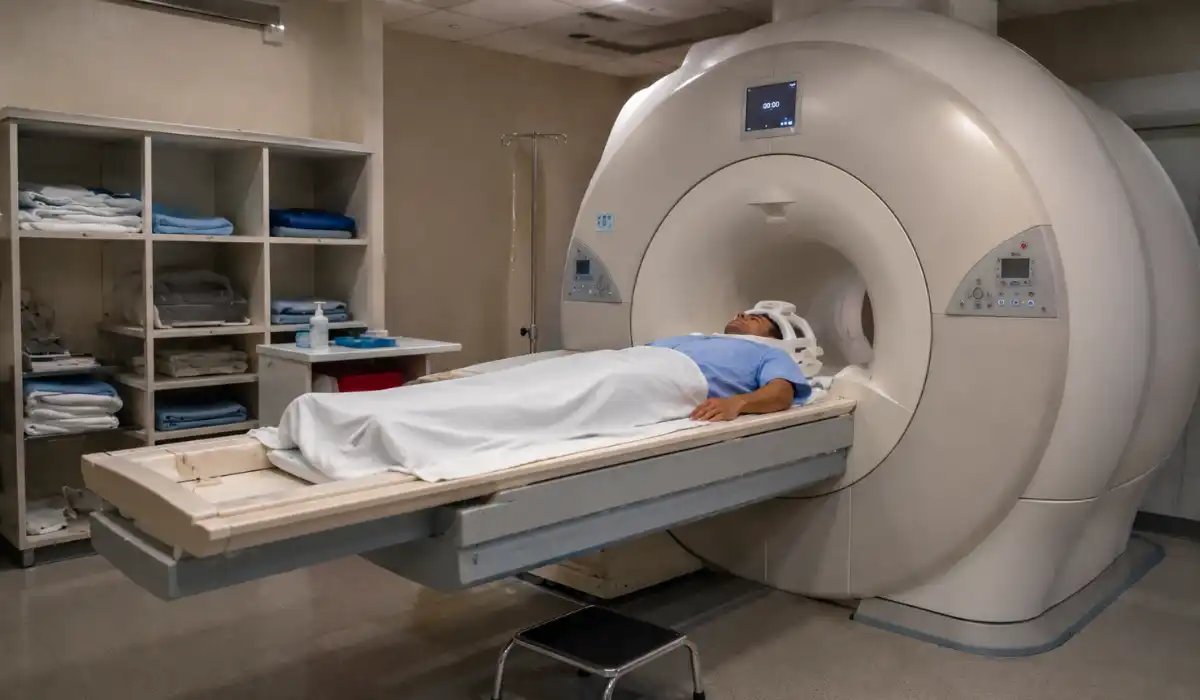
The process of an MRI scan may sound complex, but it is designed to be safe and painless. During the scan, the patient lies on a movable table that slides into the MRI machine, a large tube-like device.
The machine generates a strong magnetic field, which temporarily aligns the hydrogen atoms in the body. Then, short pulses of radio waves are sent through the body, causing these atoms to produce signals. These signals are captured and processed by a computer to create detailed images of the body’s interior.
One of the key benefits of MRI is its ability to differentiate between various types of soft tissues. The technique can highlight differences in water content, density, and chemical composition, making it highly effective for identifying issues such as inflammation, nerve compression, or abnormal growths.
Some MRI scans also use contrast agents, which are special dyes injected into the bloodstream to make certain tissues or blood vessels more visible on the scan. Contrast-enhanced MRI can help doctors detect tumors, blood clots, or vascular malformations.
Types Of MRI Scans
MRI technology offers several types of scans to meet different diagnostic needs. For a detailed comparison of comfort and image quality, see our article on Open MRI vs Closed MRI, which explains the differences, benefits, and considerations of each type.
Closed MRI
The traditional closed MRI features a cylindrical tube that fully encloses the patient. It produces high-resolution images and is preferred for detailed imaging of small structures, such as the brain or spinal cord.
The strong magnetic field enables rapid scanning with excellent clarity. However, the enclosed design may cause claustrophobia for some patients.
Open MRI
Open MRI machines have a more spacious design, reducing the sense of confinement. This format is beneficial for claustrophobic patients, larger individuals, or pediatric cases.
Open MRI technology has advanced, providing diagnostic accuracy comparable to closed MRI for many types of scans, including joint and abdominal imaging.
Specialized MRI Techniques
- Functional MRI (fMRI): Measures brain activity by detecting blood flow changes.
- Cardiac MRI: Evaluates heart function and structures.
- Diffusion MRI: Maps water movement in tissues, useful in stroke detection.
Common Applications Of MRI
MRI is versatile and can be used for:
- Neurological conditions: Stroke, multiple sclerosis, brain tumors.
- Spinal injuries: Herniated discs, spinal cord injuries.
- Musculoskeletal issues: Ligament tears, cartilage damage, joint injuries.
- Cardiovascular evaluations: Heart defects, blood vessel abnormalities.
- Oncology: Tumor detection and monitoring.
- Abdominal scans: Liver, kidneys, pancreas, and reproductive organs.
Preparing For An MRI Scan
Preparation for an MRI scan is generally straightforward. Patients are usually advised to remove all metallic objects, including jewelry, watches, or clothing with metal zippers, as metal can interfere with the magnetic field.
It is also important to inform the technologist about any implants, pacemakers, or medical devices inside the body, as some may be affected by the strong magnetic field. Wearing comfortable, metal-free clothing and following specific instructions from the healthcare provider ensures a smooth scanning process.
During the scan, it is essential for patients to remain as still as possible, as movement can blur the images. Many patients are provided with earplugs or headphones to minimize the loud knocking sounds produced by the MRI machine.
For children or patients who feel anxious, some facilities offer sedation or allow a companion to be present in the room to provide comfort.
What To Expect During And After the Scan
During the scan, patients must remain still to avoid blurred images. The duration can range from 15 minutes to over an hour, depending on the area and use of contrast.
After the scan, most patients can resume normal activities immediately. Results are reviewed by a radiologist, who provides detailed reports to the referring physician for diagnosis and treatment planning.
Benefits Of MRI Scans
MRI scans offer numerous advantages for both patients and healthcare providers. First, they provide detailed and accurate imaging without exposing patients to harmful radiation. This makes them particularly suitable for repeated imaging over time.
MRI is also highly versatile, capable of visualizing both hard and soft tissues, blood vessels, and even functional activity in certain organs.
For conditions such as spinal injuries, brain disorders, joint damage, and heart problems, MRI often provides more precise information than other imaging methods.
Risks And Considerations
While MRI scans are generally safe, there are a few considerations. The strong magnetic field means that patients with certain medical implants, metal fragments, or electronic devices may not be suitable candidates for the scan.
Additionally, some patients may experience discomfort due to the enclosed space in closed MRI machines. Claustrophobic individuals or young children may need support, sedation, or an open MRI alternative.
Side effects are rare, but some people may experience mild reactions to contrast agents used in certain scans.
Conclusion
An MRI scan is a vital diagnostic tool that provides detailed, non-invasive imaging of the body’s internal structures, helping doctors detect and monitor a wide range of medical conditions.
From evaluating soft tissues, joints, and the brain to identifying tumors and heart abnormalities, MRI offers unmatched clarity and accuracy without exposing patients to harmful radiation.
With advancements such as open MRI systems and specialized imaging techniques, patients now have safer, more comfortable options that reduce anxiety and accommodate diverse needs.
Understanding the purpose, process, and benefits of MRI scans empowers patients to make informed healthcare decisions and actively participate in their treatment plans.
Frequently Asked Questions
MRI scans provide detailed images of the body’s internal organs, tissues, and bones to help doctors detect injuries, abnormalities, and diseases accurately.
Yes, MRI scans are generally safe because they use magnetic fields and radio waves instead of radiation. Certain implants or devices may require precautions.
Scans typically last between 15 minutes to over an hour, depending on the area being examined and whether a contrast agent is used.
Yes, children can have MRI scans. Open MRI systems or mild sedation may be used to ensure comfort and minimize movement.
Closed MRI provides higher-resolution images but can feel confining. Open MRI reduces claustrophobia and can accommodate larger or pediatric patients, though image resolution may be slightly lower.
Yes, all jewelry, watches, and metallic objects should be removed to prevent interference with the magnetic field.
No, MRI scans are non-invasive and painless. Some patients may experience mild discomfort from lying still or the machine’s noise.
MRI is highly versatile but not always the best choice for certain conditions. Doctors may combine it with other imaging methods, like X-rays or CT scans, for a comprehensive evaluation.
References
- RadiologyInfo – MRI Overview
https://www.radiologyinfo.org/en/info.cfm?pg=bodymr - Mayo Clinic – MRI Scan
https://www.mayoclinic.org/tests-procedures/mri/about/pac-20384768 - Johns Hopkins Medicine – MRI (Magnetic Resonance Imaging)
https://www.hopkinsmedicine.org/health/treatment-tests-and-therapies/magnetic-resonance-imaging-mri - American College of Radiology – MRI Safety Guidelines
https://www.acr.org/Clinical-Resources/Radiology-Safety/MR-Safety - National Institute of Biomedical Imaging and Bioengineering – MRI
https://www.nibib.nih.gov/science-education/science-topics/magnetic-resonance-imaging-mri - Cleveland Clinic – MRI Scan: What to Expect
https://my.clevelandclinic.org/health/diagnostics/17594-mri-magnetic-resonance-imaging